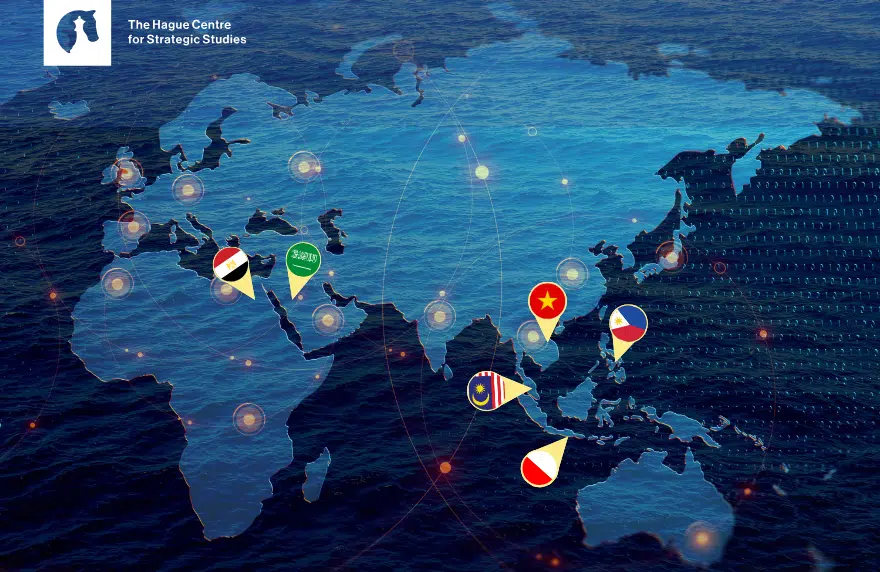
As maritime threats intensify and become more hybrid in nature, safeguarding the South China Sea and the Red Sea has become essential for Europe. Both regions face rising instability from great power rivalry, territorial disputes, blue crime, and environmental pressures, directly endangering sea lanes that carry a large share of international trade. These heightened risks now require European states to work more closely with littoral partners, including Egypt and Saudi Arabia in the Red Sea and Indonesia, Malaysia, the Philippines and Vietnam in the South China Sea. Europe must enhance its ability to prevent and respond to threats through collaborative measures that strengthen maritime governance, improve awareness, and build crisis management capacity.
This more volatile maritime environment compels Europe to reassess how it protects vital trade routes. Establishing a reliable framework for both preventive cooperation, focused on early detection and deterrence, and responsive cooperation, focused on joint action during incidents, has become central to maintaining secure and open seas. Evaluating threat levels and identifying where such measures are most effective is therefore crucial as Europe develops a more resilient and partnership driven approach to maritime security.
Guest Paper Series
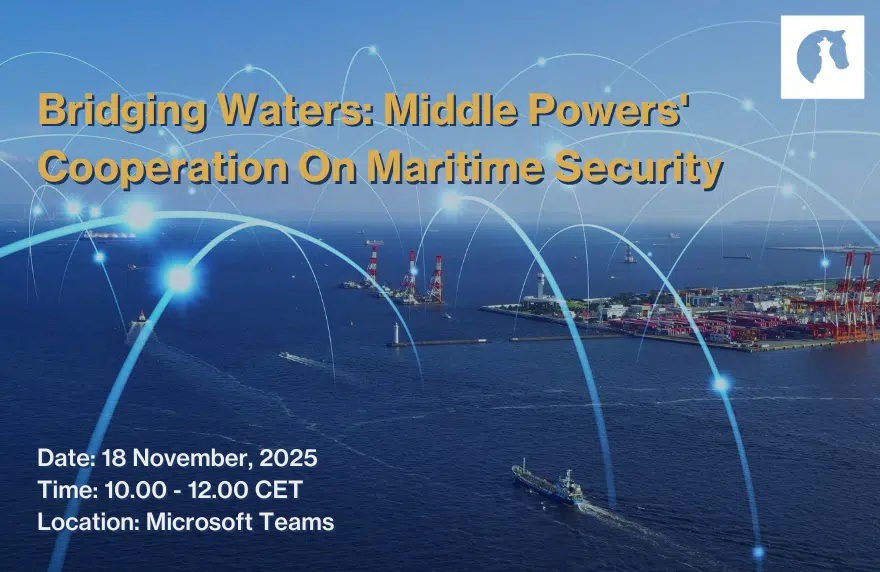
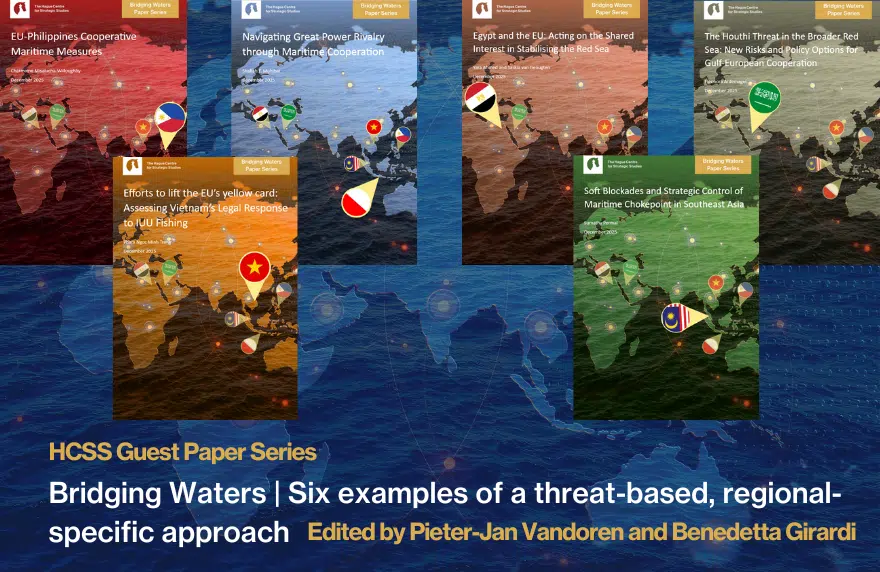
For a new paper series, six guest authors explore key aspects of maritime security cooperation between Europe and rising middle powers. Each author presents the perspective of a different littoral state, specifically Egypt and Saudi Arabia in the Red Sea region, and Indonesia, Malaysia, the Philippines and Vietnam in the South China Sea. The series builds on insights from the report ‘Bridging Waters: Strengthening Europe’s Maritime Security Engagement Through Partnerships with Rising Middle Powers’ and the webinar Bridging Waters: Middle Powers’ Cooperation on Maritime Security, held on 18 November, which brought together maritime experts from both regions to discuss avenues for further collaboration. The discussion highlighted the need for strengthened partnerships to address growing instability and to safeguard maritime routes that are vital for international trade.
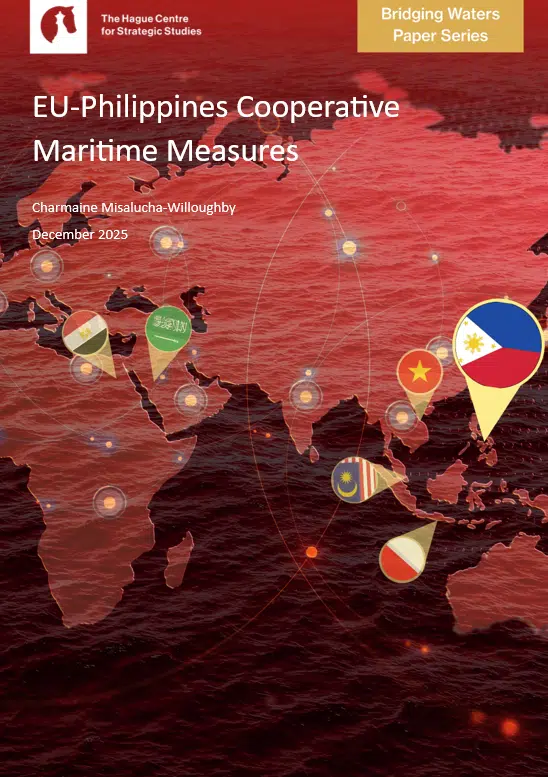
Paper 1 | EU-Philippines Cooperative Maritime Measures
The South China Sea is already a highly contested maritime space. As geopolitical tensions rise and environmental pressures deepen, modern maritime security has become increasingly complex, with economic, ecological, and strategic risks converging. For the Philippines, these challenges are acute, ranging from territorial incidents and destructive dredging to overexploited fisheries and growing pressure on coastal communities. Addressing them requires stronger partnerships and better tools for awareness and governance.
This HCSS guest paper by Charmaine Misalucha-Willoughby examines how Europe and the Philippines are expanding cooperation to manage these threats. As region-wide and bilateral mechanisms mature, the paper highlights progress in information sharing, capacity building, and maritime domain awareness. It identifies key challenges that still hinder effective action and shows how dual-use technologies, such as shared satellite monitoring and real-time vessel tracking, can help close the gap between existing commitments and operational needs.
Paper 2 | Navigating Great Power Rivalry through Maritime Cooperation
Great power rivalry in the South China Sea has shifted regional security dynamics, with daily grey zone encounters posing greater immediate risks than open conflict. In this contested environment, Indonesia finds itself on the frontline of coercive maritime activities, while Europe faces the erosion of the rules-based order it seeks to uphold. Yet the EU’s ability to engage is constrained by limited geopolitical bandwidth and competing priorities closer to home.
This HCSS guest paper by Shafiah F. Muhibat examines how the EU can remain a relevant security actor in the Indo-Pacific by adopting a focused, non-escalatory approach to maritime cooperation. Rather than pursuing military balancing, the paper argues that Europe should build on Indonesia’s diplomatic weight, operational experience, and non-aligned credibility to support preventive measures. This includes targeted joint training, legal and procedural capacity-building, and enhanced maritime domain awareness. Together, these low-footprint initiatives offer a realistic pathway for mitigating grey zone tensions without amplifying great power rivalry.
Paper 3 | Efforts to Lift the EU’s Yellow Card: Assessing Vietnam’s Legal Response to IUU Fishing
Vietnam has been under the EU’s IUU “yellow card” since 2017 due to shortcomings in vessel monitoring, enforcement, and the discharge of its Flag State responsibilities. The card has had significant economic and reputational consequences, including declining seafood exports to Europe and the risk of similar restrictions from other major markets. In response, Vietnam has undertaken substantial legal reforms, strengthening its fisheries legislation, tightening sanctions, and improving inter-agency coordination. Despite these efforts, persistent gaps remain, particularly in the monitoring of small-scale vessels, continuous VMS transmission, and the reliability of traceability systems, which continue to hinder Vietnam’s ability to demonstrate full compliance with EU standards.
This HCSS guest paper by Pham Ngoc Minh Trang analyses Vietnam’s post-2017 legal reforms and identifies the areas where cooperation with the EU remains critical. The paper highlights how European expertise in vessel monitoring, electronic reporting, and at-sea enforcement can support Vietnam in closing its remaining capacity gaps. It also outlines practical avenues for partnership, including sustained legal dialogue, joint training on VMS anomaly response, and pilot tracking programmes for small-scale vessels. Strengthening Vietnam’s compliance mechanisms would not only facilitate the lifting of the yellow card but also promote more sustainable fisheries governance, while ensuring that enforcement measures remain sensitive to Vietnam’s broader maritime security context in the South China Sea.
Paper 4 | Egypt and the EU: Acting on the Shared Interest in Stabilising the Red Sea
Instability in the Red Sea has become a major strategic concern for both Egypt and Europe. Houthi attacks, piracy, and regional conflicts have disrupted global shipping, driven up insurance costs, and forced vessels to reroute via the Cape of Good Hope. For Egypt, the impact is acute: Suez Canal revenues have fallen sharply, tourism has been affected, and wider economic vulnerabilities have been intensified. At the same time, escalating geopolitical rivalries and militarisation around the Red Sea’s chokepoints heighten the risk of miscalculation and further crises.
This HCSS guest paper by Yara Ahmed and Saskia van Genugten argues that Cairo and Brussels share a strong interest in preventing future disruptions and outlines practical opportunities for cooperation. These include strengthening the resilience and diversification of the Suez Canal, enhancing maritime situational awareness through CRIMARIO, improving coordination between naval missions, and boosting protection of undersea cables vital to Europe–Asia data flows. The paper also emphasises joint diplomatic efforts to help de-escalate conflicts in Yemen, Sudan, and the Horn of Africa. By supporting Egypt’s gatekeeper role while respecting its sovereignty sensitivities, the EU can help reinforce the stability of a corridor essential to both regional and European security.
Paper 5 | The Houthi Threat in the Broader Red Sea: New Risks and Policy Options for Gulf–European Cooperation
The Red Sea is entering a more dangerous phase as the Houthis extend their weapons range, enhance their capabilities, and deepen ties with armed groups across the region. Although the number of attacks has temporarily fallen, their lethality and geographical reach have increased, creating significant new risks for Saudi Arabia. The kingdom’s western ports, Vision 2030 projects, undersea cables, and oil export routes are all exposed, yet Riyadh still lacks a comprehensive security strategy for the Red Sea. Regional cooperation frameworks remain weak, leaving Saudi Arabia with limited tools to address rapidly evolving maritime threats.
This HCSS guest paper by Eleonora Ardemagni argues that these developments create a strong rationale for closer cooperation between Saudi Arabia and European partners. With the EU preparing to prioritise Red Sea security in 2026, the paper identifies several practical avenues for joint action. These include coordinated support for the Yemeni Coast Guard, investment in Red Sea coast-guard capabilities, enhanced intelligence sharing, and the elevation of maritime security within the EU-GCC Regional Security Dialogue. By working together through targeted and realistic initiatives, Saudi Arabia and Europe can strengthen maritime resilience, counter emerging smuggling and militant networks, and help stabilise a waterway that is essential for regional security and global trade.
Paper 6 | Soft Blockades and Strategic Control of Maritime Chokepoints in Southeast Asia
Maritime chokepoints in Southeast Asia are becoming increasingly exposed as strategic competition shifts away from overt military confrontation towards subtler forms of coercion. Instead of relying on formal naval blockades, states are making greater use of soft blockades and grey-zone tactics, including regulatory pressure, selective enforcement, maritime militia activity, and persistent law-enforcement presence at sea. In heavily trafficked waterways such as the Straits of Malacca and the South China Sea, these practices raise the risk of congestion, miscalculation, and gradual constraints on freedom of navigation, with serious implications for regional stability and global trade
This HCSS guest paper by Sumathy Permal examines how soft and hybrid blockade dynamics are reshaping the governance and security of Southeast Asia’s strategic maritime chokepoints. The paper places these developments in a broader global context, drawing comparisons with other contested straits, while highlighting the particular challenges created by overlapping maritime claims, dense vessel traffic, and limited coordination mechanisms in the South China Sea. Focusing on Malaysia’s national responses, the paper shows how enhanced coast guard capabilities, legal and institutional reform, and sustained participation in multilateral frameworks can help manage seemingly coercive practices without escalating tensions. It further argues that targeted EU–Malaysia cooperation, focused on capacity building, maritime domain awareness, legal support, and preparedness for grey-zone scenarios, offers a realistic pathway to strengthening chokepoint resilience while upholding a rules-based maritime order.
Editors: Pieter-Jan Vandoren and Benedetta Girardi
Quality Assurance: Paul Sinning
The research for and production of this report has been conducted within the PROGRESS research framework agreement. Responsibility for the contents and for the opinions expressed, rests solely with the authors and does not constitute, nor should be construed as, an endorsement by the Netherlands Ministries of Foreign Affairs and Defence.



Related Content