HCSS
  • News
    • BNR | De Strateeg
    • Columns
    • Events
    • HCSS Newsletter
    • Podcasts
  • Publications
    • Publications
      • All Projects
      • All Publications
    • Geopolitics & Governance
      • Transatlantic Relations
      • Russia & Eurasia
      • Europe in the Indo-Pacific
      • AI in the Military Domain
      • PROGRESS / Strategic Monitor
    • Economics & Technology
      • Emerging Technologies
      • Critical Materials
      • Energy Security
    • Defence & Security
      • On Future War
      • Deterrence and Arms Control
      • Hybrid Threats
      • Cyber Security
    • Society & Resilience
      • Nationale Veiligheid en Weerbaarheid
      • Publieksmonitor Maatschappelijke Stabiliteit
      • Transnational Organised Crime
      • Strategic Monitor Dutch Police
    • Climate, Water & Food
      • Climate Security
      • Water, Peace & Security (WPS)
      • International Military Council on Climate and Security (IMCCS)
      • Food Security
  • Dashboards
    • Dashboards
      • All Tools
        • GINA
        • SARA
        • GATRI
        • DOMINO
    • Geopolitics & Governance
      • Diplomatic Networks
      • News Networks
      • Dutch Foreign Relations
      • Chinese Hybrid Threats
    • Economics & Technology
      • Economic Networks
      • Economic Risk
      • Critical Materials Supply Chains
      • Critical Materials Map
      • Critical Materials Pricing
      • Cyber Arms Watch
    • Defence & Security
      • Military Networks
      • Nuclear Timeline
    • Society & Resilience
      • Conflict Monitor
    • Climate, Water & Food
      • Agrifood Monitor
  • Leadership Practice
    • HCSS Leadership Practice
    • HCSS Boardroom
    • Leergang Strategie en Weerbare Rechtsorde
    • Strategic Negotiations Course
    • Serious Gaming
    • IDCSS | Indo-Dutch Cyber Security School
    • SANCS | Southern Africa-Netherlands Cyber Security School
  • About HCSS
    • Contact Us
    • HCSS Datalab
    • Our People
    • Funding & Transparency
    • Internship Programme
    • Press & Media Inquiries
    • Studio HCSS
    • Working at HCSS
    • Global Futures Foundation
  • Click to open the search input field Click to open the search input field Search
  • Menu Menu

News

New Snapshot | Capability and Ambition Mismatch in the Indo-Pacific: A Middle Power Strategy for the EU

January 23, 2023

How can a middle power strategy in the Indo-Pacific enable the EU to pursue greater strategic autonomy?

The latest HCSS Europe in the Indo-Pacific snapshot is out now, by assistant analyst Stella Kim and senior strategic analyst Paul van Hooft, and argues that by analysing the strategies of prevailing middle powers in the region, the EU can improve its own approach in the Indo-Pacific and settle on one better suited for its capabilities. The EU interest in the Indo-Pacific stems from the importance of region not only as a centre of geopolitics but as the home of four in ten of its largest trading partners. So, Indo-pacific waterways are essential for EU trade. Since 2021, the EU has had its own Indo-Pacific Strategy along with a High Representative.

A middle power strategy for the EU matches the EU’s experience, behaviour and capabilities. European middle powers lack a robust military presence in the region and are less willing to commit more military might, as Russia is regarded more of a threat than China to European interests. So, an alternative approach is needed. Middle powers, which frequently utilize multilateral solutions to international problems, provides a viable alternative. The EU is itself not a middle power, but an organisation of middle powers but it could de facto function as a middle power while seeking to expand its influence in the region.

The Indo-Pacific provides many opportunities for middle power diplomacy. For example, by focusing on infrastructure, connectivity, economic development and non-traditional security issues (human assistance and disaster relief, illegal fishing, anti-piracy, climate change), a grouping of middle powers could bring less of a security-centric focus on the region. This paper will take a closer look at prevailing middle power strategies in the Indo-Pacific, including of South Korea, Australia and Indonesia, and how the EU can best model its own strategy.

Download PDF
  • Share on Facebook
  • Share on X
  • Share on WhatsApp
  • Share on LinkedIn
  • Share by Mail

Experts

Paul van Hooft

Related News

Related Content

Capability and Ambition Mismatch in the Indo-Pacific: A Middle Power Strategy for the EU 
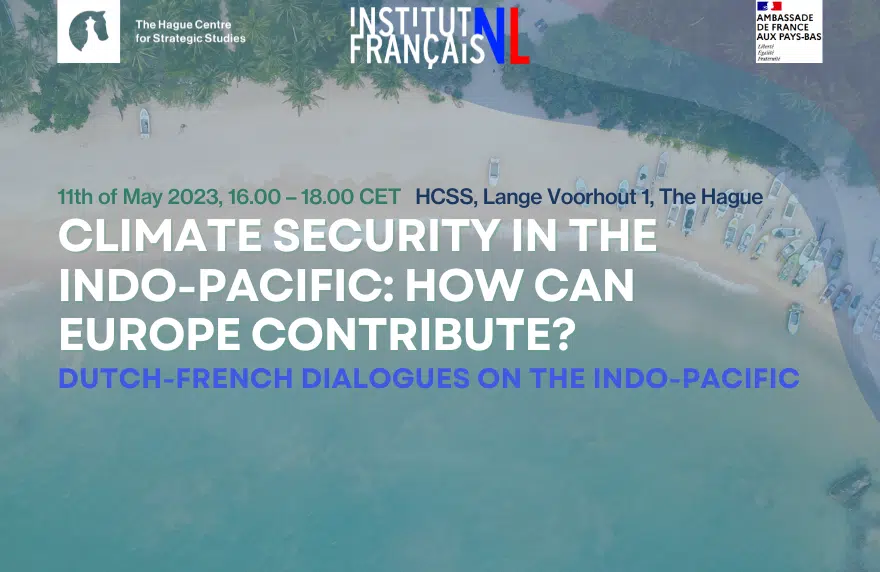
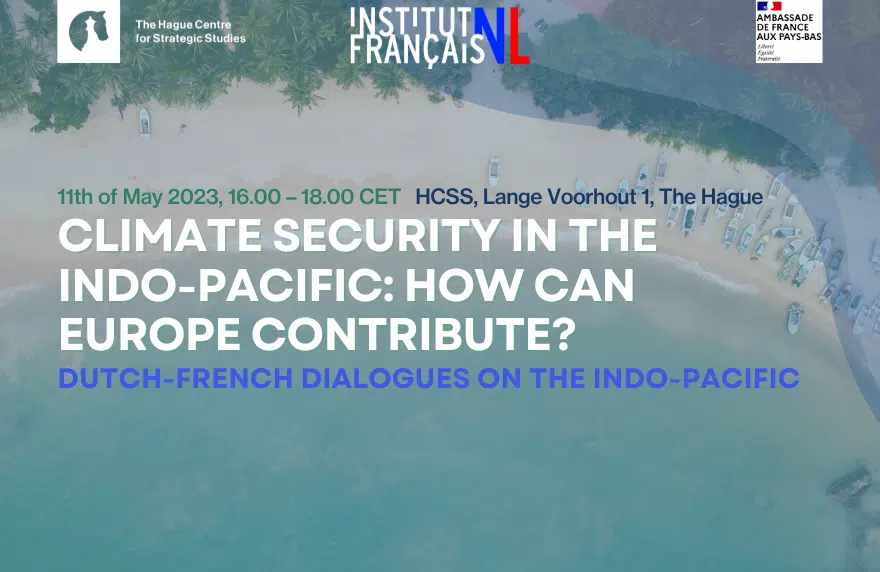
Climate security in the Indo-Pacific: How can Europe contribute? Dutch-French Dialogues on the Indo-Pacific.
Event | Climate security in the Indo-Pacific: How can Europe contribute? Dutch-French Dialogues on the Indo-Pacific

Office Address

  • The Hague Centre for Strategic Studies
  • Lange Voorhout 1
  • 2514 EA The Hague
  • The Netherlands

Contact Us

  • Telephone: +31(70) 318 48 40
  • E-mail: info@hcss.nl
  • IBAN NL10INGB0666328730
  • BIC INGBNL2A
  • VAT NL.8101.32.436.B01
  • Contact

Legal & Privacy

  • Disclaimer & Privacy
  • Algemene Voorwaarden 2024 (NL) 
  • Terms & Conditions 2024 (ENG) 
  • Algemene Voorwaarden 2026 (NL) 
  • Terns & Conditions 2026 (EN) 
  • Coordinated Vulnerability Disclosure
  • Ethical Standards
  • Manual for Responsible Use of AI

Follow us

© The Hague Centre for Strategic Studies
    Link to: Column Energiepodium: De run op grondstoffen Link to: Column Energiepodium: De run op grondstoffen Column Energiepodium: De run op grondstoffen Link to: NOS op 3: Hoe China (nu nog) de baas is over onze groene toekomst Link to: NOS op 3: Hoe China (nu nog) de baas is over onze groene toekomst NOS op 3: Hoe China (nu nog) de baas is over onze groene toekomst
    Scroll to top Scroll to top Scroll to top

    GDPR Consent

    Your privacy is important to us. Here you can set which consent you are allowing us with regards to the collection of general information, the placing of cookies of the collection of personal information. You can click 'Forget my settings' at the bottom of this form to revoke all given consents.

    Privacy policy | Close
    Settings

    GDPR Consent Settings

    Your privacy is important to us. Here you can set which consent you are allowing us with regards to the collection of general information, the placing of cookies of the collection of personal information. You can click 'Forget my settings' at the bottom of this form to revoke all given consents.

    Website statistics collect anonymized information about how the site is used. This information is used to optimize the website and to ensure an optimal user experience.

    View details

    Functional cookies are used to ensure the website works properly and are neccessary to make the site function. These cookies do not collect any personal data.  

    View details
    Forget my settings Deleted!