Publications

Over the years, HCSS has built up an extensive archive of reports, monitors, papers and other publications. We disseminate the results of our research as broadly as possible to benefit the public good. Use the advanced search functions below to browse through our research library, most of which is available as free PDF downloads.
11 Mar 2020
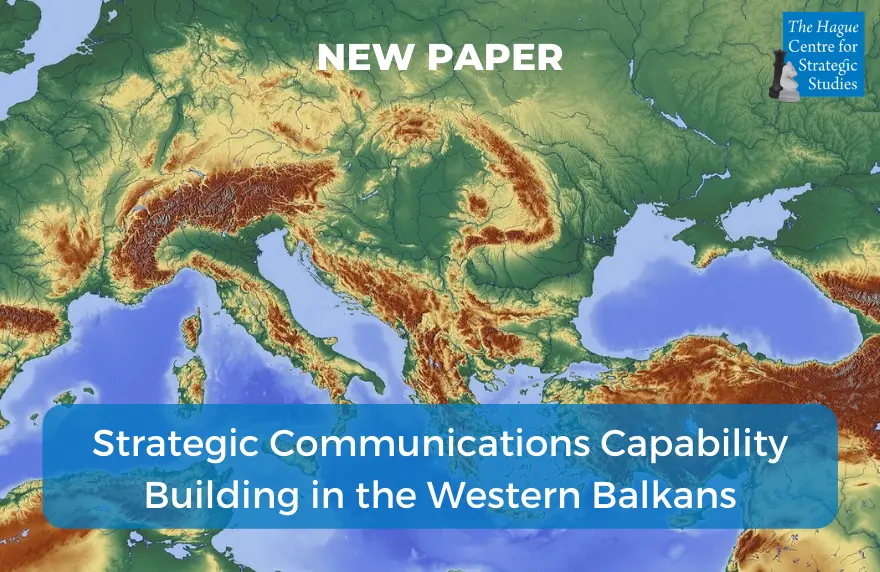
The strengthening of strategic communication capabilities in the states of the Western Balkans is of crucial importance for the strengthening of regional and European security. The Western Balkans StratCom Game, executed by The Hague Centre for Strategic Studies, with the support of the Austrian Ministry of Defence, has sought to identify the course of action […]
10 Mar 2020
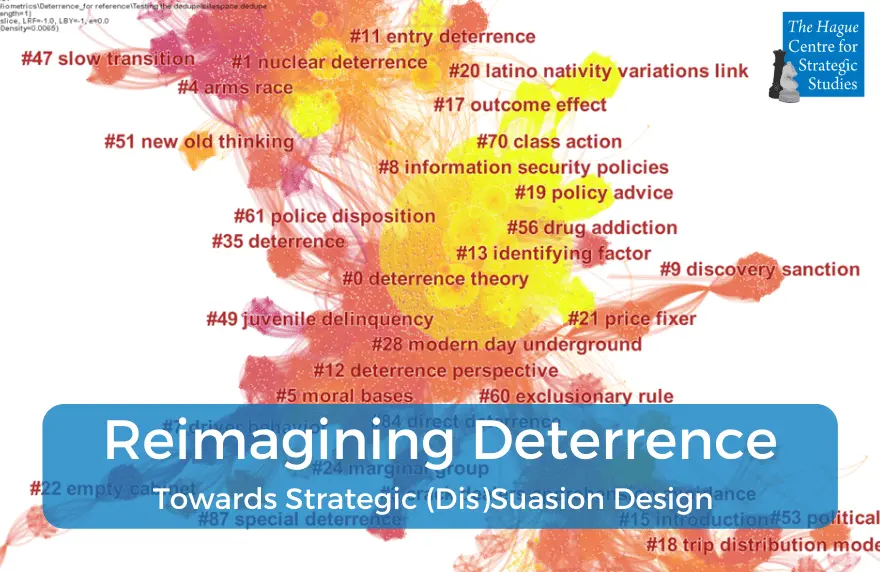
Given the increasingly tense posturing of world powers like the U.S., Russia, and China, as well as political volatility across the globe, deterrence has once again become a popular feature of many governments’ strategies. However, the old framework of deterrence that was developed during the Cold War has become outdated in an age of more […]
28 Feb 2020
This paper looks into the state of robotic and autonomous systems (RAS) and their current implementation in the military context, as well as their potential applications. RAS presents numerous, significant and far-reaching opportunities, including creating better and faster situational awareness and understanding, reducing the physical and cognitive loads of soldiers, sustaining and protecting the force, extending […]
20 Feb 2020
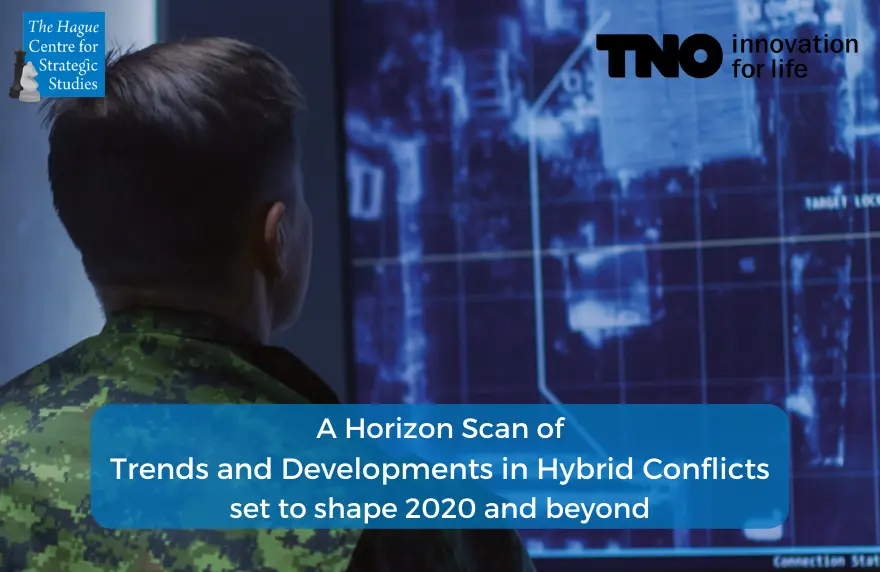
In collaboration with TNO, we present this booklet on trends and developments in hybrid conflicts set to shape 2020 and beyond. Hybrid threats are one of the main security challenges Western democracies currently struggle with. Hybrid threats are in the news, mostly framed or wrapped in specific ‘hybrid’ phenomena such as disinformation, foreign meddling in […]
18 Feb 2020
Far-right violent extremism is thriving in several parts of South East Europe (SEE), but despite its widespread influence, relatively little research has been done on its alarming reach. Therefore, this paper assesses the origin and perpetuation of far-right violent extremism in SEE and finds that the situation there uniquely facilitates the spread of far-right ideology, […]
3 Feb 2020
The international community has been vividly discussing ways to control the use of autonomous weapon systems (AWS) by military forces. Throughout the process, both legal and non-legal solutions have been proposed aiming to improve accountability, ethical and legal standards, and verifiability of the autonomous systems. HCSS surveyed the landscape of proposed solutions in order to […]
Strategic Monitor 2019 2020
28 Jan 2020
In order to remain on top of the rapid changes in the international environment, the Dutch Ministry of Foreign Affairs and Ministry of Defence have tasked The Hague Centre for Strategic Studies (HCSS) and the Clingendael Institute to conduct research within the framework of the Strategic Monitor, which monitors trends and developments in the international […]
27 Jan 2020
Over the last decade, long-term forecasts of Dutch natural gas production in small fields have consistently over-estimated production. The main reason for this is not technical or geological but rather an underestimate of the speed at which the business climate for the Dutch gas industry has deteriorated. Fewer projects than expected materialized; the projects that […]
25 Jan 2020
Has the world become more free and secure, or is democracy under attack? This report aims to answer the question “what is the state of the world today?” It is part of our upcoming Strategic Monitor 2019-2020.
25 Jan 2020
This short paper outlines the indicators and methods used to establish whether the world has become more equitable and prosperous, more democratic, and more peaceful. It also outlines the indicators and methods used to establish whether identitary issues have become a larger force in the international system, whether lawlessness has increased, and whether the world has become more connected. It is part of our upcoming Strategic Monitor 2019-2020.
24 Jan 2020
Navigating the changing global environment requires first and foremost a keen understanding of changes in Dutch foreign relations. The Dutch Foreign Relations Index (DFRI) measures the relationship between the Netherlands and other countries over time. This can help in identifying potential partners as well as potential adversaries in the pursuit of Dutch foreign policy objectives. It is part of our upcoming Strategic Monitor 2019-2020.
24 Jan 2020
New report out now! To read, click here. This method piece outlines HCSS’ approach to measuring the Netherlands’ position in the world on the basis of other countries’ relevance and compatibility. Relevance considers how much the Netherlands trades with another country, how militarily advanced it is, and how much influence it wields internationally. Compatibility is […]
22 Jan 2020
Terrorism from the far-right is gradually increasing, but effective and adequate legal tools for holding perpetrators accountable are lacking, whereas Islamist terrorism is framed and prosecuted in a much more extensive way. Politicized double standards must be overcome in order to hold perpetrators of terrorist violence accountable – irrespective of any specific ideology.
14 Jan 2020
All countries have procedures and – in some cases – methodologies to identify, analyze and prioritize threats to their national security. How does the Dutch perception of its security threats compare to the outlook of other states? It’s all in the eye of the beholder…This report is part of our upcoming Strategic Monitor 2019-2020.
10 Jan 2020
The international security environment is increasingly subject to hybrid threats, often in a subtle and pervasive way that impedes fast detection, accountability and retaliation. Read about ins and outs of Hybrid Conflict in our latest report, part of our upcoming Strategic Monitor 2019-2020.
7 Jan 2020
Dr. Tim Sweijs contributed an article on information warfare at the dawn of the information age, in the Sicherheitspolitische Jahresvorschau 2020, the annual national security foresight of the Austrian Ministry of Defense. At the dawn of the Information Age, all signs point towards the proliferation and maturation of tools and the sophistication of tactics used in […]
18 Dec 2019
Liberal Western democracies have been too complacent when it comes to dealing with contemporary hybrid adversaries. We have been following rather than leading. It’s time to seize back the strategic initiative, but how do we do that? In this new report, a joint paper by HCSS/TNO, Tim Sweijs and Samo Zilincik argue that Western democracies can and should develop a strategic deterrent posture in an age of hybrid conflict. Based on an extensive review of cross domain deterrence theory and practice, they offer four recommendations to policymakers.
4 Dec 2019
As Russian and Chinese defense expenditures pivot towards the acquisition of more sophisticated weapons systems, can Europe keep up on innovation? Hugo van Manen and Tim Sweijs present the latest report on Interstate Military Competition.
19 Nov 2019
The Global Security Pulse (GSP) on Conflict in Cyberspace was published in June 2019 and tracked emerging trends in relation to peace and security in cyberspace. This complementary research report delves into the two trend tables presented in the GSP by examining their underlying quantitative and qualitative evidence. First, the ‘Threats in Cyberspace’ trend table, […]
17 Nov 2019
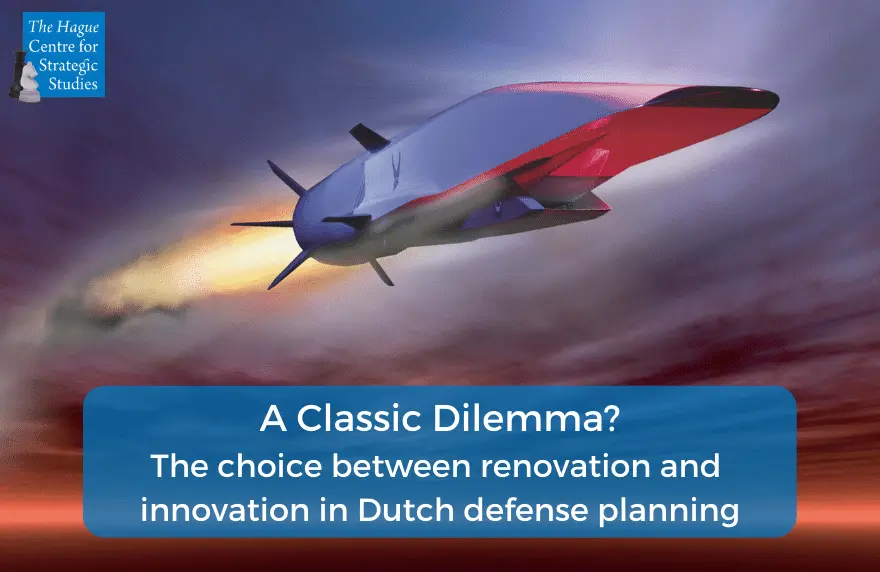
The three main tasks for Defence can be found in the Constitution, Article 97, which states that a defence force exists to defend the Kingdom and the territory of the alliances (NATO and EU), to maintain and promote the international rule of law and to support the government in upkeeping the law, fighting disasters and […]
13 Nov 2019
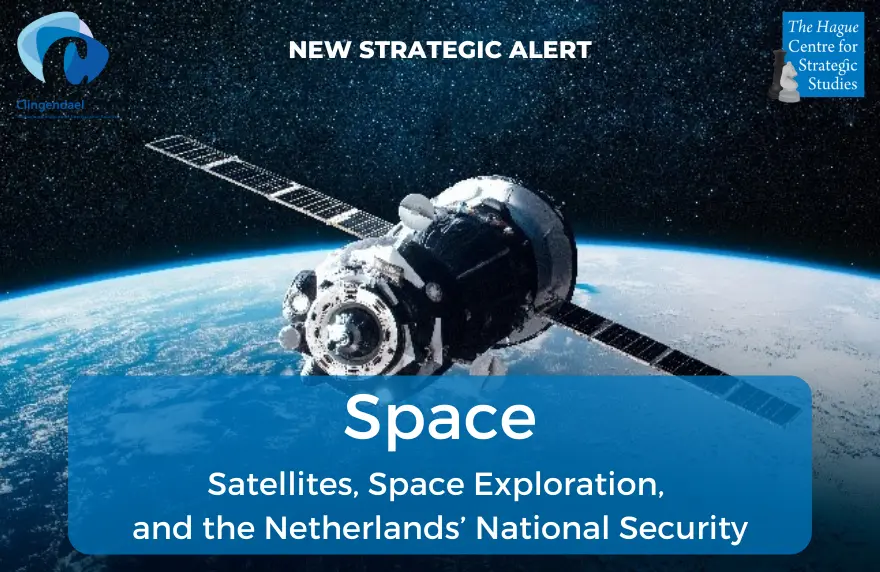
In this paper Assistant Analyst Liam van de Ven and Strategic Analyst Patrick Bolder examine the opportunities, challenges and urgency of Dutch activity in space. They offer a two-track approach, involving both tailor-made nanosatellites and international constellations.
13 Nov 2019
Cyberspace represents one of the greatest inventions of mankind, reshaping personal, social, business, and political relationships. Unfortunately, due to attacks on and through cyberspace, urgent action is needed to ensure its stability. This concept of cyberspace stability—like its close cousin, international stability—requires a shared vision, one in which all parties recognize that geopolitical disagreements and […]
24 Oct 2019
The Global Security Pulse (GSP) tracks emerging security trends and risks worldwide, allowing you to stay ahead in new security developments. This month we present novel developments and must-reads on hybrid conflict. Our research suggests that the international security environment is increasingly characterized by hybrid strategies that fall under military, political, economic, information, and cyber domains. Hybrid threats are characterized […]
18 Oct 2019
As NATO celebrates the 70th anniversary of its Founding Treaty this year, many fundamental aspects of its future are widely debated within the Alliance itself. Western views on NATO’s future have, throughout the seven decades of its existence, ranged from those who predicted NATO’s imminent demise to those who claimed that the many ties that […]

© The Hague Centre for Strategic Studies