
HCSS
  • News
    • BNR | De Strateeg
    • Columns
    • Events
    • HCSS Newsletter
    • Podcasts
  • Publications
    • Publications
      • All Projects
      • All Publications
    • Geopolitics & Governance
      • Transatlantic Relations
      • Russia & Eurasia
      • Europe in the Indo-Pacific
      • AI in the Military Domain
      • PROGRESS / Strategic Monitor
    • Economics & Technology
      • Emerging Technologies
      • Critical Materials
      • Energy Security
    • Defence & Security
      • On Future War
      • Deterrence and Arms Control
      • Hybrid Threats
      • Cyber Security
    • Society & Resilience
      • Nationale Veiligheid en Weerbaarheid
      • Publieksmonitor Maatschappelijke Stabiliteit
      • Transnational Organised Crime
      • Strategic Monitor Dutch Police
    • Climate, Water & Food
      • Climate Security
      • Water, Peace & Security (WPS)
      • International Military Council on Climate and Security (IMCCS)
      • Food Security
  • Dashboards
    • Dashboards
      • All Tools
        • GINA
        • SARA
        • GATRI
        • DOMINO
    • Geopolitics & Governance
      • Diplomatic Networks
      • News Networks
      • Dutch Foreign Relations
      • Chinese Hybrid Threats
    • Economics & Technology
      • Economic Networks
      • Economic Risk
      • Critical Materials Supply Chains
      • Critical Materials Map
      • Critical Materials Pricing
      • Cyber Arms Watch
    • Defence & Security
      • Military Networks
      • Nuclear Timeline
    • Society & Resilience
      • Conflict Monitor
    • Climate, Water & Food
      • Agrifood Monitor
  • Leadership Practice
    • HCSS Leadership Practice
    • HCSS Boardroom
    • Strategic Negotiations Course
    • Serious Gaming
    • IDCSS | Indo-Dutch Cyber Security School
    • SANCS | Southern Africa-Netherlands Cyber Security School
  • About HCSS
    • Contact Us
    • HCSS Datalab
    • Our People
    • Funding & Transparency
    • Internship Programme
    • Press & Media Inquiries
    • Studio HCSS
    • Working at HCSS
    • Global Futures Foundation
  • Click to open the search input field Click to open the search input field Search
  • Menu Menu

News

Launch of ‘The Transatlantic Bargain’

February 2, 2012

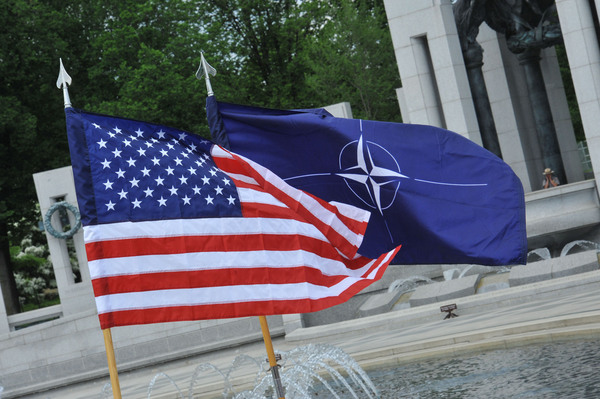
On 1 February 2012 ‘The Transatlantic Bargain’ was launched, a joint study by the NATO Defense College and the National Defense University in Washington D.C. The study brought together a number of renowned experts from both sides of the Atlantic.

Since the speech of outgoing U.S. Secretary of Defense Robert Gates in June last year, the question of transatlantic burden sharing and NATO’s cohesion is back on the agenda. The transatlantic relationship might be uncontested in its basics but it faces a host of challenges in today’s security environment: insufficient military capabilities on the European side of the Atlantic, no fair share of duties and responsibilities for common security, or insufficient political will among many NATO partners to contribute to common operations. Some in Europe might add that there are also doubts over Washington’s future willingness to lead. Even NATO’s success in Libya cannot paper over the existing cracks within the Alliance’s transatlantic fabric with respect to common goals and common commitments.

What happened to the great concept of the “Transatlantic Bargain” – in short, the deal in which North America provided security for its European allies in return for their acceptance of American leadership – which held NATO together for many decades? Did it ever actually exist, or was it more an illusion suitable for heartwarming Sunday speeches but not for political realities? Is there a way to revitalize this bargain as a means to keeping the transatlantic link stable despite the fundamentally changed security requirements?

The study addressed three aspects of this question:

• Was there ever a transatlantic bargain and, if so, what was it?

• What would a transatlantic bargain look like today?

• In such a bargain, what would be NATO’s role? What needs to be done?

The report of the study has been attached as PDF.

  • Share on Facebook
  • Share on X
  • Share on WhatsApp
  • Share on LinkedIn
  • Share by Mail

Experts

Related News

Related Content

Good Fear, Bad Fear How European defence investments could be leveraged to restart arms control negotiations with Russia
Between the Berlaymont and the Glass Palace – 2026
Taming Techno-Nationalism (Sept. 2021)

Office Address

  • The Hague Centre for Strategic Studies
  • Lange Voorhout 1
  • 2514 EA The Hague
  • The Netherlands

Contact Us

  • Telephone: +31(70) 318 48 40
  • E-mail: info@hcss.nl
  • IBAN NL10INGB0666328730
  • BIC INGBNL2A
  • VAT NL.8101.32.436.B01
  • Contact

Legal & Privacy

  • Disclaimer & Privacy
  • Algemene Voorwaarden 2024 (NL) 
  • Terms & Conditions 2024 (ENG) 
  • Algemene Voorwaarden 2026 (NL) 
  • Terns & Conditions 2026 (EN) 
  • Coordinated Vulnerability Disclosure
  • Ethical Standards
  • Manual for Responsible Use of AI

Follow us

© The Hague Centre for Strategic Studies
    Link to: Samenwerkingsovereenkomst ‘The Hague Security Delta’ (NL) Link to: Samenwerkingsovereenkomst ‘The Hague Security Delta’ (NL) Samenwerkingsovereenkomst ‘The Hague Security Delta’ (NL) Link to: Sophie Roborgh over de zesde dag zware aanvallen in Syrië (NL) Link to: Sophie Roborgh over de zesde dag zware aanvallen in Syrië (NL) Sophie Roborgh over de zesde dag zware aanvallen in Syrië (NL)
    Scroll to top Scroll to top Scroll to top

    GDPR Consent

    Your privacy is important to us. Here you can set which consent you are allowing us with regards to the collection of general information, the placing of cookies of the collection of personal information. You can click 'Forget my settings' at the bottom of this form to revoke all given consents.

    Privacy policy | Close
    Settings

    GDPR Consent Settings

    Your privacy is important to us. Here you can set which consent you are allowing us with regards to the collection of general information, the placing of cookies of the collection of personal information. You can click 'Forget my settings' at the bottom of this form to revoke all given consents.

    Website statistics collect anonymized information about how the site is used. This information is used to optimize the website and to ensure an optimal user experience.

    View details

    Functional cookies are used to ensure the website works properly and are neccessary to make the site function. These cookies do not collect any personal data.  

    View details
    Forget my settings Deleted!