
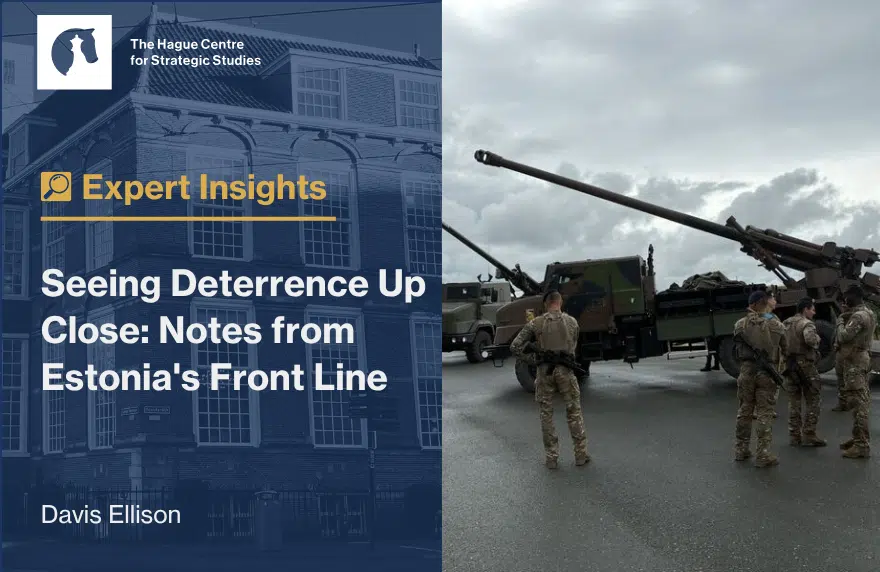
Just days before the 2026 NATO Summit in Ankara, HCSS strategic analyst Davis Ellison joined a study tour of Estonia to gain first-hand insight into security on NATO’s eastern flank. From military exercises at Tapa and the border city of Narva to discussions with senior Estonian officials, journalists and security experts, the visit highlighted how deterrence, resilience and regional cooperation shape daily life on Europe’s frontier with Russia. It also offered a stark reminder of what is ultimately at stake in defending the Alliance’s eastern border.
From 15 to 18 June, I took a study tour sponsored by the Estonian Ministries of Foreign Affairs and Defence, organised to familiarise researchers and journalists with the challenges Estonia and its neighbours face. Just ahead of the 2026 NATO Summit in Ankara, it was important for those who study and cover European security to see it up close, rather than second hand.
Guided by staff from both ministries, we first visited an Estonian military base at Tapa, about halfway between Tallinn and the Russian border in the north of the country. The base hosts the 1st Estonian Brigade as well as the forward units of a NATO multinational battlegroup led by the United Kingdom and France.
High Readiness at Tapa
This was no quiet administrative headquarters. Whole companies of young Estonian, British, and French combat troops are actively training and exercising here. We received off-the-record briefings with senior military and civilian defence officials and were also shown the capabilities of French artillery and British mid-range air defence systems. Though much was off-the-record, it was enough to see how close and how many Russian forces are becoming concentrated on the border with Estonia, Latvia, and Lithuania. Further, these are no conscripts, but battle-hardened units with now years of experience against Ukraine.
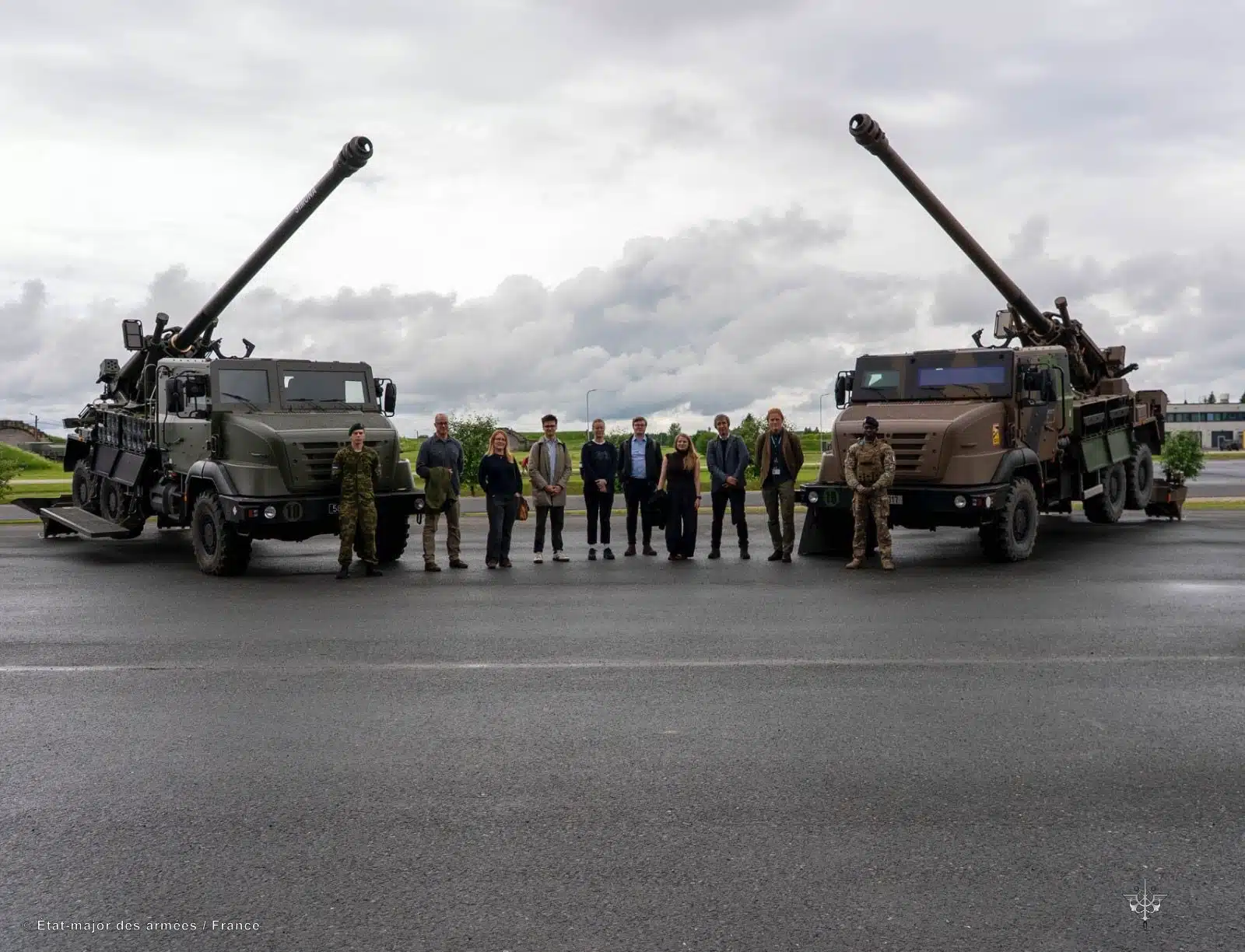
Group picture with French and Estonian CAESAR self-propelled artillery
We then met with the commanding officer of the Scouts Battalion, part of the 1st Brigade, a unit with a storied history both during Estonia’s first republic and since independence in 1991. This is one of the spearhead units based near Narva that would face the brunt of any future Russian attack. Operating Swedish-made CV90 infantry fighting vehicles (IFVs), they are a high-readiness, highly mobile unit meant to strike any incoming Russian columns from the first minutes of war. Along with the rest of the 1st Brigade and the associated NATO units, this battalion does regular, realistic training in every imaginable condition.
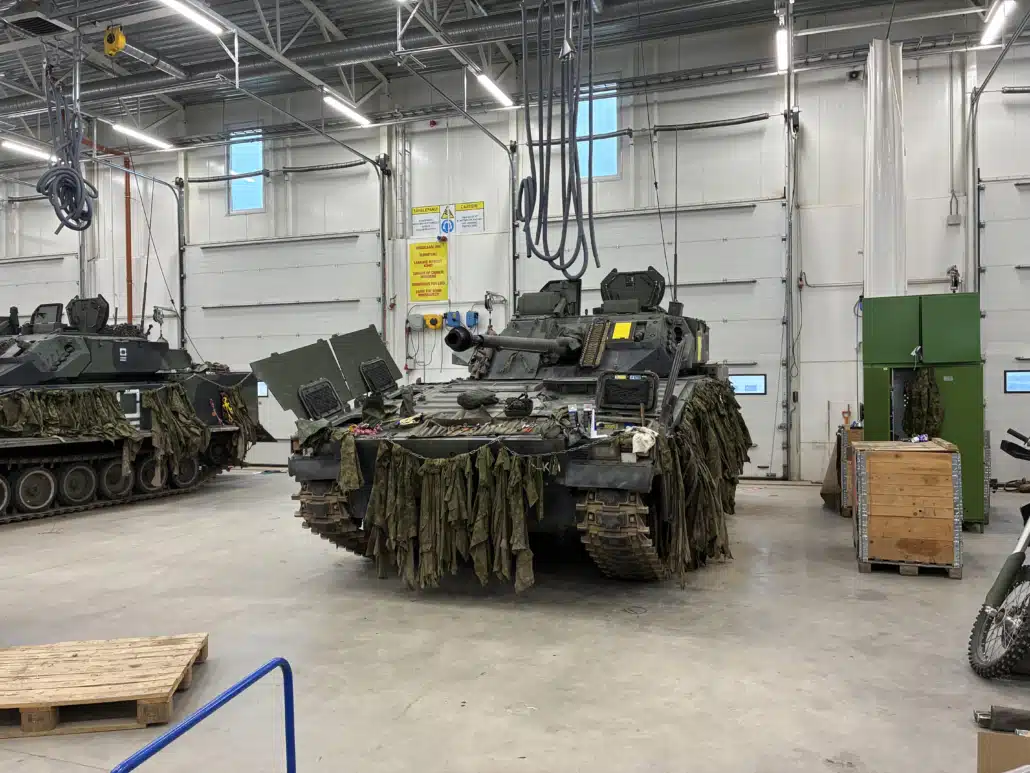
Estonian Swedish-made CV90 infantry fighting vehicles
Our parting sight of the base at Tapa was a Tracked Hybrid Modular Infantry System (THeMIS), an Estonian-made unmanned ground vehicle, the type that has seen combat in Ukraine already. This, taken with all else seen at Tapa, gave a much clearer impression of what is meant when NATO forces say high readiness. If a war starts with Russia, one of the places it would almost certainly affect is here.
At the Border with Russia
From Tapa, we drove further east, to Narva. As we entered the city, ministry staff told us to turn our phones to airplane mode, otherwise they would automatically connect to the Russian cell towers just across the river. Though there is some security risk there, the main reasoning we were given was to avoid roaming charges.
Narva is a small, busy city nestled along the furthest northeast corner of Estonia along the Narva River. It is also right across the bridge from the Russian city of Ivangorod, a fortress city built by Russian tsar Ivan III in 1470. In contrast to the bustling, European town of Narva, Ivangorod is visibly quieter. It is a smaller, highly monitored town by Russian security services. It has also been a routine place for refugees from Ukraine travelling through Russia to pass through to Estonia.
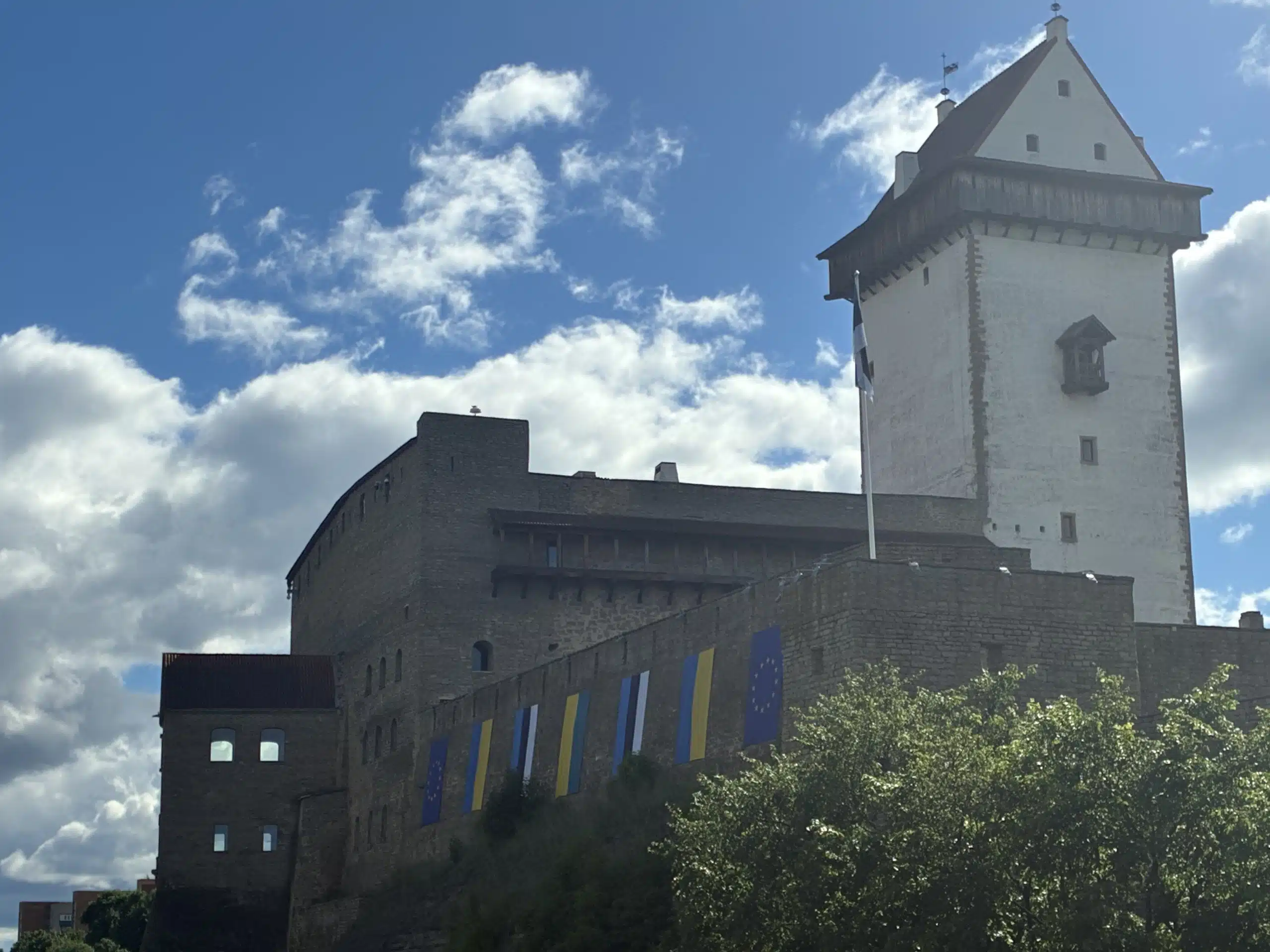
The view of Narva Castle from the border bridge, featuring Estonian, Ukrainian and EU flags
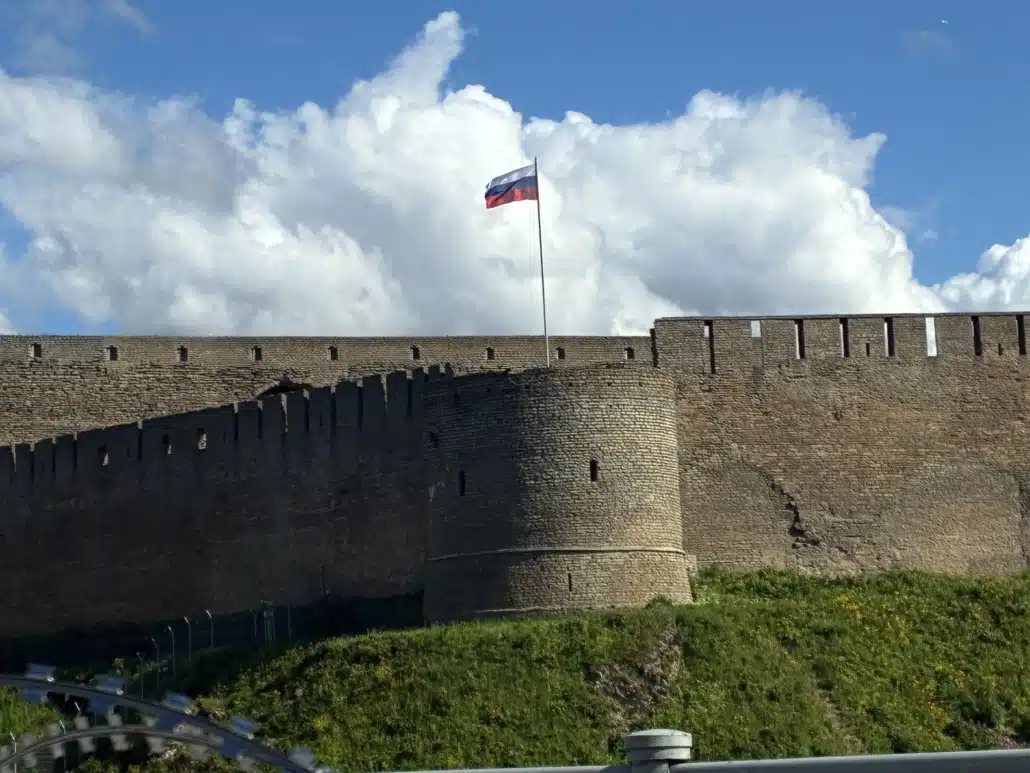
Russia’s Ivangorod fortress, less than 100 metres away
A continuous message regarding Narva was for writers and analysts to stop conflating the Russian-speaking population of the city with being a ‘fifth column’. Members of that community are overwhelmingly in favour of being and remaining Estonian. The young men of the community are subject to conscription just like everyone else. There is no sense of tension in the city. As with everywhere else, people just want to get on with their lives. While language can be a challenge, as Estonian teachers work to integrate the younger generation of this region into Estonian speaking schools, this is largely viewed as something that will change as the Soviet-era generation fades away.
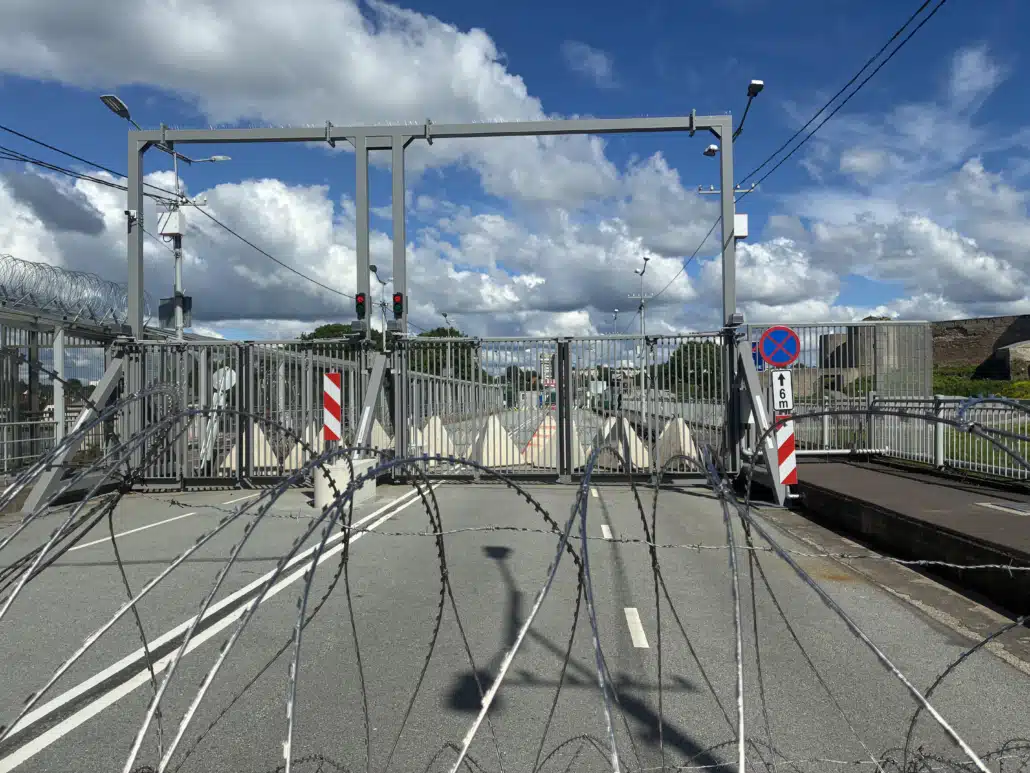
On the border bridge, metres away from Russia and FSB border forces
Our visit to Narva also featured a stop with the Estonian Border Police, and a walk out onto the bridge connecting the city and Ivangorod on the other side of the river. Each of us was eager to get as close as possible, walking straight up to the gate and watching the FSB guards watch us. The head of the regional unit described their daily working routines with the Russian side, as the border is still active for foot traffic for those with dual-citizenship or the right visas. As already mentioned, there have also been many refugees from Ukraine.
Unsurprisingly, the bridge has been a site of tension in recent years. In 2023, Russian security services attempted to force a group of refugees and migrants from various countries across the bridge. They were stopped by Estonian police prior to actually crossing the border, as they were visibly being forced with (likely FSB) officers behind them. According to the border officers, once they were turned back, they were arrested by Russian police for being undocumented. A notable example of the type of inhumane treatment common from Russian services.
Beyond the Front Line: Estonia’s Security Perspective
The next two and a half days were spent in Tallinn, meeting with investigative reporters from the Delfi media group, the chairman of the Estonian Parliament’s foreign affairs committee, the minister of foreign affairs, director for national security and defence coordination, the deputy commander of the cyber command, and policy directors from the Ministry of Foreign Affairs (MFA) and the Ministry of Defence (MoD). The next featured experts on disinformation, the Internal Security Service, the Information Systems Agency, the MFA legal head, and even Bolt. Full days certainly.
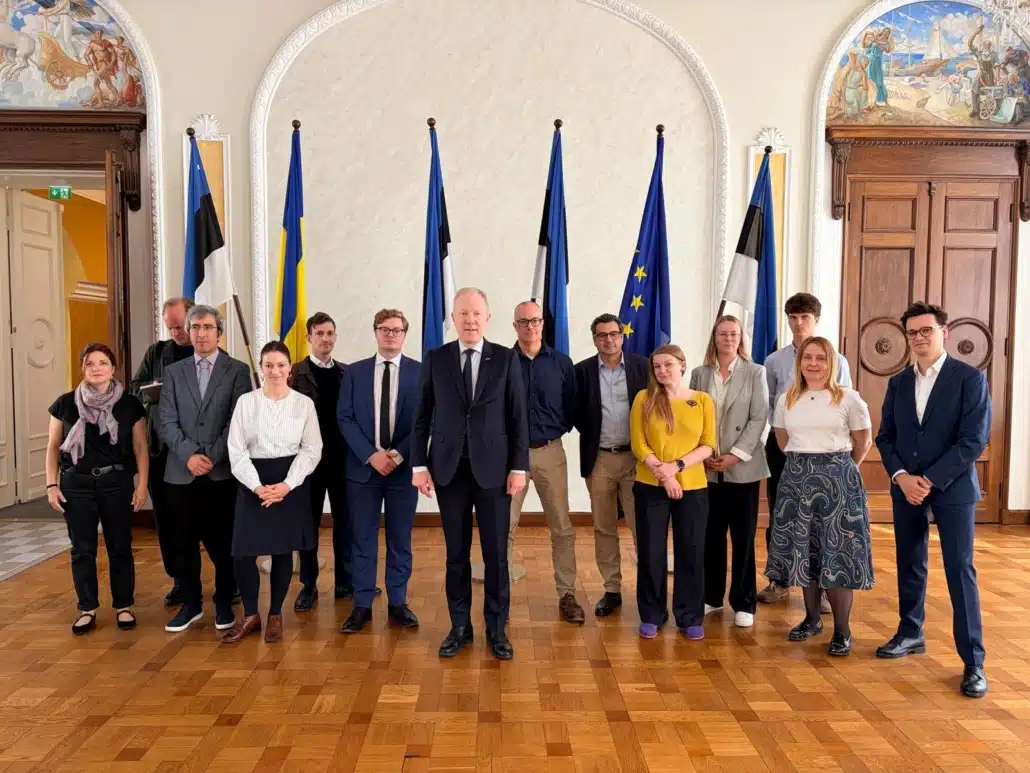
Meeting with Marko Mihkelson, Chairman of the Foreign Affairs Committee
Three Enduring Themes
Without summarising two days’ worth of off-the-record discussions, it is enough to describe a few common themes that have appeared.
First, is that dealing with Russian attempts at intimidation and sabotage is part of living next to them. From journalists to the Internal Security Service is to keep a calm head and understand that the Baltic states are quite good at interrupting many of these operations. Further, Russia is perhaps more risk averse than they seem. Messaging from NATO allies in light of recent drone incursions, caused by Russian jamming, and at least one occasion of airspace violations by manned aircraft have had real effects.
A second theme was the importance of regional cooperation. The recent meeting of the Nordic-Baltic 8 (Denmark, Estonia, Finland, Iceland, Latvia, Lithuania, Norway, and Sweden) with Ukrainian president Volodymyr Zelenskyy was frequently cited as an important step in regional defence cooperation, from building shared military capabilities to aligning politically. This was always balanced with the message that all of this is not seen as incongruent with EU and NATO efforts elsewhere.
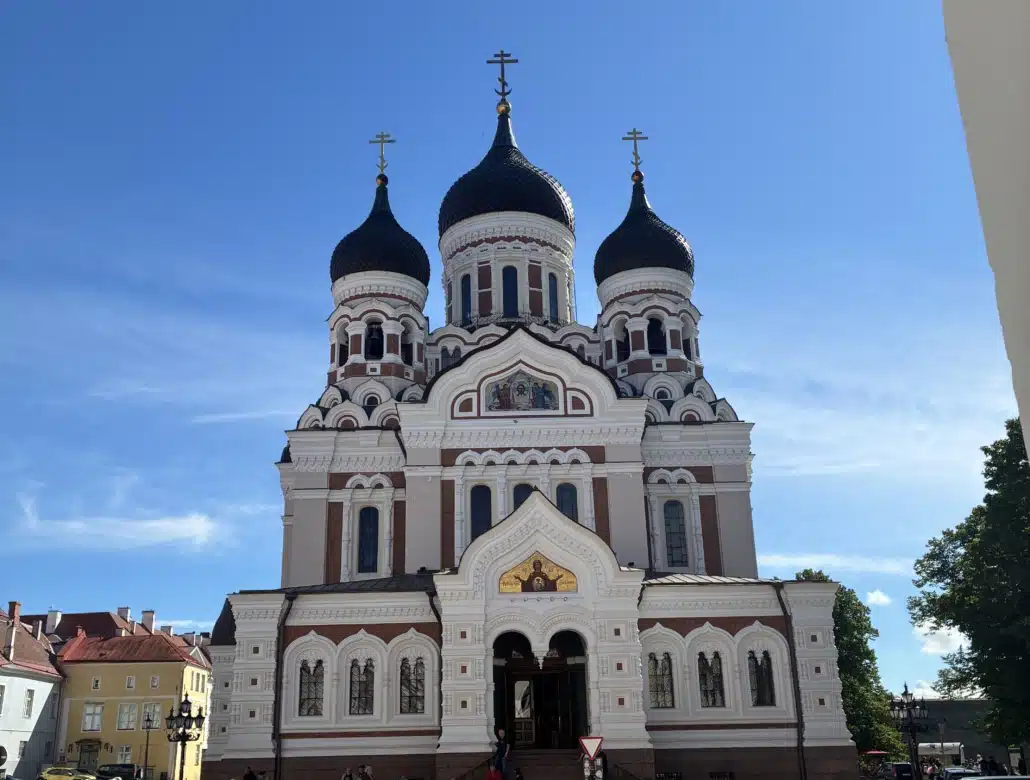
The controversial Alexander Nevsky Cathedral Eastern Orthodox Church, right across the street from the Estonian Parliament
A third theme to highlight is the concern surrounding transatlantic relations. Behind all the discussions on Russia and on wider European issues was the looming NATO Summit in Ankara. Would it be another challenge for NATO? What if America pulls more troops from Europe? How can the Baltic states that centre Washington in their defence thinking, balance this with American threats against the EU, their other cornerstone of security? It was clear that these are still just as open questions in Tallinn as they are in Berlin, Warsaw, Paris, and The Hague. As an historian, I can only really say that time will tell.
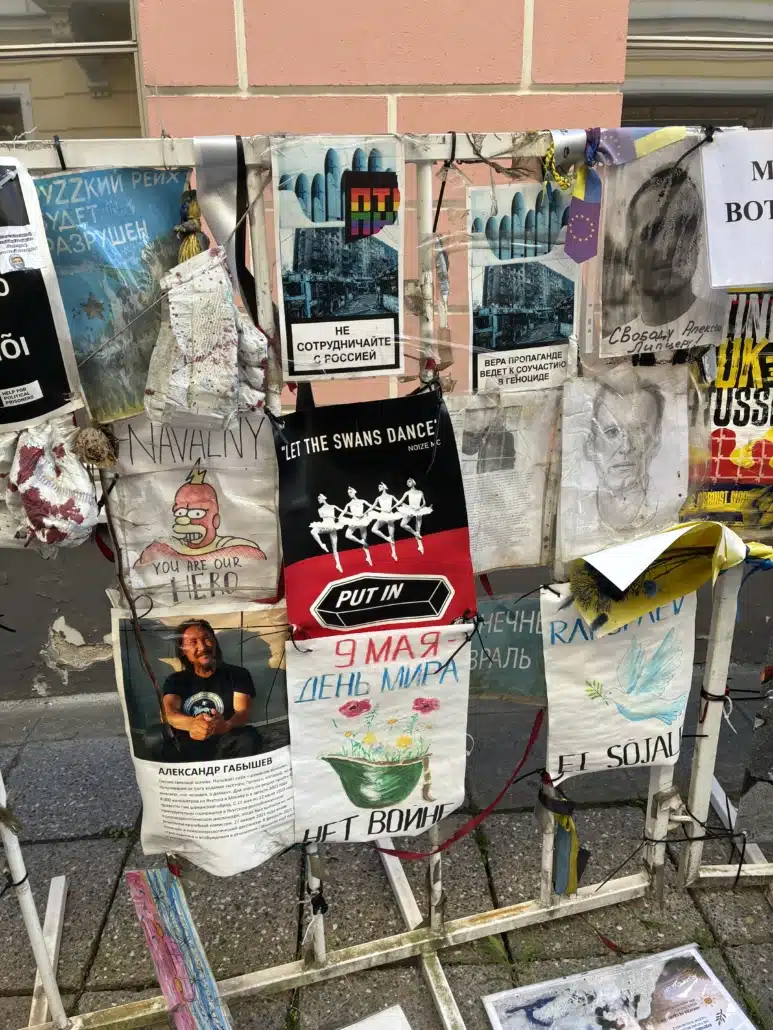
Protest placards outside the Russian Embassy, from a range of dissident groups
Remembering What Is at Stake
The final visit was the prison, Patarei Prison. A Soviet then Nazi German and then Soviet again era prison where farmers, schoolteachers, and political activists from the first Republic of Estonia were detained, deported from, and executed en masse. A sprawling building that held tens of thousands throughout the 20th century. An execution room, a dark, windowless, ground floor room that saw innocent prisoners shot in the head by NKVD officers.
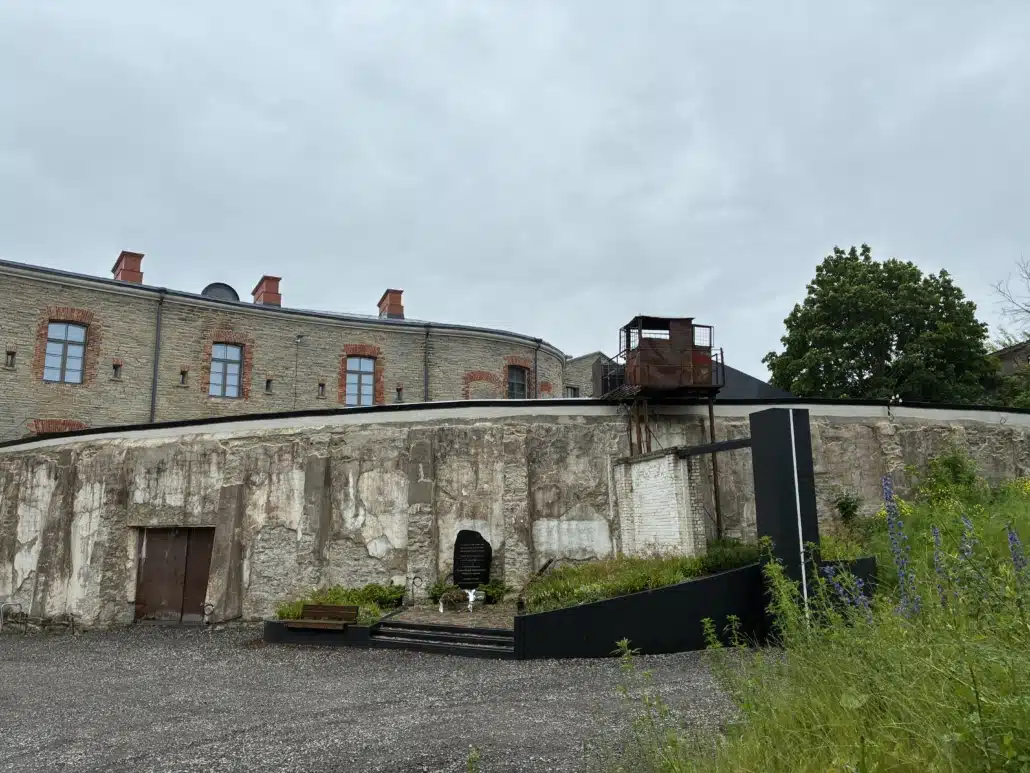
One of the gates of Patarei Prison
One cannot avoid thoughts of Ukrainian prisoners shot, tortured, and raped by Russian forces in Ukraine. Or Bashar al-Assad’s Sednaya Prison in Damascus. More than military parades, threatening speeches, or corrupt elites, the clearest symbols of authoritarianism are the cold, grey walls of prisons and the darkness of basement execution chambers.
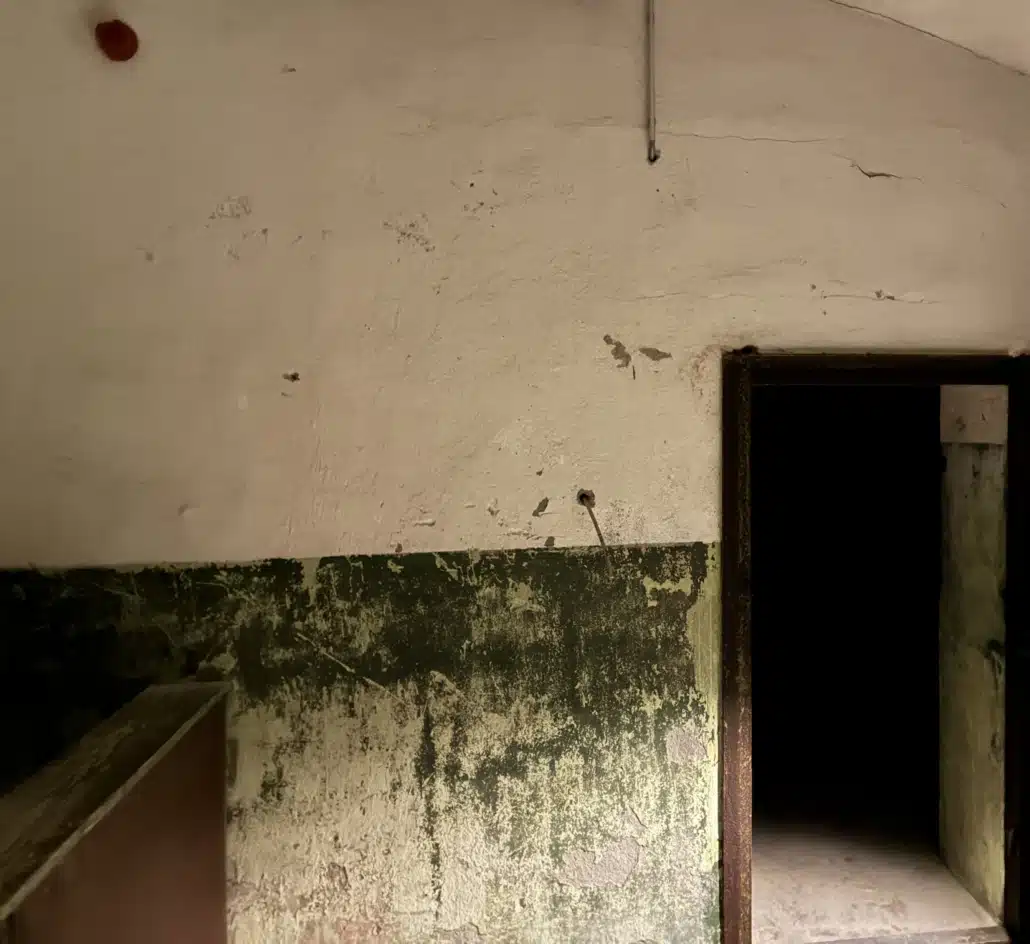
The entrance to the Patarei Prison execution chamber
From Theory to Reality
The visit to the prison brought the whole trip full circle. All too often, researchers in strategic and war studies view the world through theoretical abstractions, in offices far away from front lines and tense borders. Recalling the young soldiers stationed in Tapa, ready to combat a Russian advance at a moment’s notice, one can draw a direct line between any failures of the alliance in the east to the execution chambers waiting anyone caught behind the lines of yet another Russian war.
Estonia’s security challenges are often discussed through the language of strategy, deterrence and defence planning. Yet this visit underscored that these concepts ultimately concern people, communities and the preservation of freedom. From the soldiers training at Tapa to the residents of Narva and the victims remembered at Patarei Prison, the trip offered a powerful reminder that European security is not an abstract debate. It is a lived reality on NATO’s eastern frontier, where the consequences of success or failure remain tangible.
Dr. Davis Ellison, Strategic Analyst
Experts

Related Content


