HCSS
  • News
    • BNR | De Strateeg
    • Columns
    • Events
    • HCSS Newsletter
    • Podcasts
  • Publications
    • Publications
      • All Projects
      • All Publications
    • Geopolitics & Governance
      • Transatlantic Relations
      • Russia & Eurasia
      • Europe in the Indo-Pacific
      • GC REAIM
      • PROGRESS / Strategic Monitor
    • Economics & Technology
      • Emerging Technologies
      • Critical Materials
      • Energy Security
    • Defence & Security
      • On Future War
      • Deterrence and Arms Control
      • Hybrid Threats
      • Cyber Security
    • Society & Resilience
      • Nationale Veiligheid en Weerbaarheid
      • Transnational Organised Crime
      • Strategic Monitor Dutch Police
    • Climate, Water & Food
      • Climate Security
      • Water, Peace & Security (WPS)
      • Food Security
  • Dashboards
    • Dashboards
      • All Tools
        • GINA
        • SARA
    • Geopolitics & Governance
      • DFRI
      • GINA | Diplomatic
      • GINA | Information
      • CLARIS
    • Economics & Technology
      • DOMINO
      • GATRI
      • GINA | Economic
      • Cyber Arms Watch
      • Cyber Comparator
      • Cyber Norms Observatory
      • Cyber Transparency
    • Defence & Security
      • GINA | Military
      • Nuclear Timeline
    • Society & Resilience
      • DAMON
    • Climate, Water & Food
      • Agrifood Monitor
      • CARMEN
      • CRM Dashboard
  • Services
    • HCSS Boardroom
    • HCSS Datalab
    • Socio-Political Instability Survey
    • Strategic Capability Gaming
    • Strategic Negotiations Course
    • Studio HCSS
    • Southern Africa-Netherlands Cyber Security School 2026
    • Indo-Dutch Cyber Security School 2025
  • GC REAIM
    • GC REAIM | Former Members
    • GC REAIM | Publications
    • GC REAIM | Conferences
    • GC REAIM | Partners, Sponsors, Supporters
  • About HCSS
    • Contact Us
    • Our People
    • Funding & Transparency
    • Partners & Clients
    • Internship Programme
    • Press & Media Inquiries
    • Working at HCSS
    • Global Futures Foundation
  • Click to open the search input field Click to open the search input field Search
  • Menu Menu

News

Column Nieuwe Oogst: ‘De rekening van Trump: Chinese heffingen en een verzwakt Europa’

January 15, 2026

Het jaar 2025 is voor Europa een kanteljaar geweest. Rusland, de Verenigde Staten en China hebben de aanval ingezet. We staan er alleen voor; de Amerikaanse president Donald Trump moet niets hebben van het ‘woke’ en ‘gedegenereerde’ Europa. Hij legde importheffingen op en dreigde de steun aan de NAVO te stoppen.

De negatieve effecten van de handelsoorlog met de Verenigde Staten compenseert China met grotere exporten richting Europa. Daardoor betalen wij de rekening voor Trumps handelspolitiek. Bovendien beticht China de Europese Unie van ‘oneerlijke handelspraktijken’ en legt ons daarom ook heffingen op. In december stelde China deze definitief vast, variërend van 4,9 tot 19,8 procent.

Omdat Nederland varkensvlees op de Chinese markt zou hebben gedumpt, werden vleesexporteurs hard getroffen. Vervolgens richtten de pijlen zich op zuivel. Zo kreeg FrieslandCampina een heffing van 42,7 procent opgelegd. Officieel zijn de heffingen een antwoord op die van Europa voor goedkope Chinese elektrische auto’s, maar in de praktijk speelt geopolitiek een cruciale rol.

China moet de export beschermen om nummer één van de wereld te worden. Ook Trump wordt door zijn geopolitieke instincten gedreven; door de hele wereld heffingen op te leggen, moeten bedrijven hun productie naar de Verenigde Staten verleggen en moet zijn land eerste blijven.

Mercosur was vooral een aanleiding voor protesten tegen overbodige regels en de mogelijke vermindering van landbouwsubsidies

Het kost de Europese Unie moeite om met een antwoord te komen. Afzonderlijk zijn de lidstaten te klein om het geopolitieke spel te spelen. Alles draait om deelbelangen van groepen, zoals boeren. Daardoor worden de lidstaten de speelbal van de grootmachten die Europa vooral als een belangrijke afzetmarkt zien.

Het Europese geopolitieke onvermogen bleek ook uit het handelsverdrag Mercosur, waarover bijna 25 jaar is onderhandeld. Het verdrag struikelde over tienduizend boeren die naar Brussel waren opgerukt; ze verzetten zich tegen de bijna 100.000 ton bevroren en vers rundvlees dat voor een laag tarief uit Zuid-Amerika mag worden geïmporteerd. Dat dit slechts 1,5 procent is van de Europese productie deed er niet toe.

Mercosur was vooral een aanleiding voor protesten tegen overbodige regels en de mogelijke vermindering van landbouwsubsidies. Gevolg is dat de Italiaanse premier Giorgia Meloni het verdrag voorlopig blokkeert. Daarmee blokkeert ze ook een overeenkomst met gelijkgestemde landen, waardoor alle lidstaten in de geopolitieke strijd verder worden verzwakt.

Dat Europese samenwerking in een geopolitiek turbulente wereld essentieel is en dat dit offers vraagt, is de boodschap die in 2026 duidelijker moet worden uitgedragen.

Bron: Rob de Wijk, Nieuwe Oogst, 8 januari 2025

  • Share on Facebook
  • Share on X
  • Share on WhatsApp
  • Share on LinkedIn
  • Share by Mail

Experts

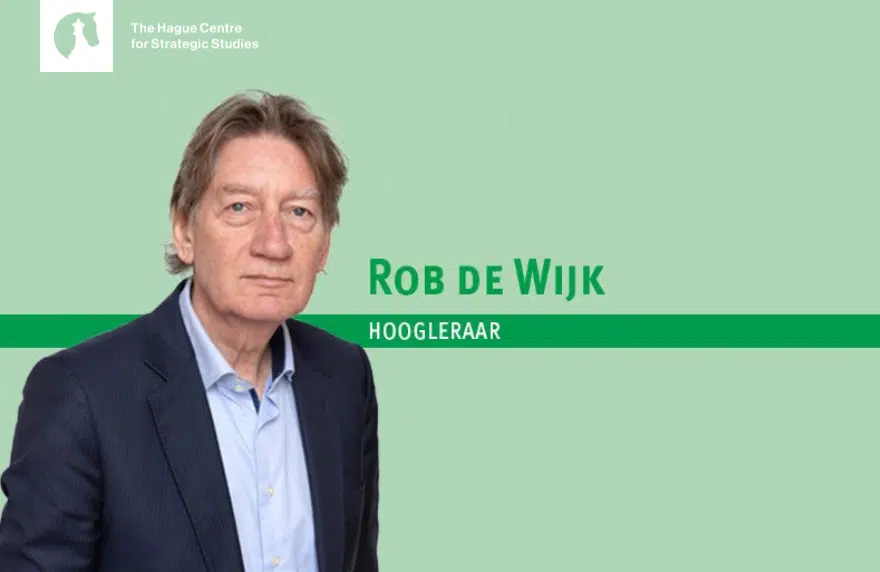
Rob de Wijk

Related News

Related Content

Column Nieuwe Oogst: ‘Trump en Xi dwingen de Europese landbouw tot zelfonderzoek’
Column Nieuwe Oogst: ‘Landbouw als middel om relatie met Trump te verbeteren’
Column Nieuwe Oogst: ‘Soja als wapen: wat de Europese Unie moet leren van China’

Office Address

  • The Hague Centre for Strategic Studies
  • Lange Voorhout 1
  • 2514 EA The Hague
  • The Netherlands

Contact Us

  • Telephone: +31(70) 318 48 40
  • E-mail: info@hcss.nl
  • IBAN NL10INGB0666328730
  • BIC INGBNL2A
  • VAT NL.8101.32.436.B01
  • Contact

Legal & Privacy

  • Disclaimer & Privacy
  • Algemene Voorwaarden (NL) 
  • Terms & Conditions (ENG) 
  • Coordinated Vulnerability Disclosure
  • Ethical Standards
  • Manual for Responsible Use of AI

Follow us

© The Hague Centre for Strategic Studies
    Link to: The HCSS Datalab presents: GINA Economic 2.0 Link to: The HCSS Datalab presents: GINA Economic 2.0 The HCSS Datalab presents: GINA Economic 2.0 Link to: New Event | From Situational to Systemic: Strengthening Europe’s Resilience in an Era of Strategic Shocks Link to: New Event | From Situational to Systemic: Strengthening Europe’s Resilience in an Era of Strategic Shocks New Event | From Situational to Systemic: Strengthening Europe’s Resilience...
    Scroll to top Scroll to top Scroll to top

    GDPR Consent

    Your privacy is important to us. Here you can set which consent you are allowing us with regards to the collection of general information, the placing of cookies of the collection of personal information. You can click 'Forget my settings' at the bottom of this form to revoke all given consents.

    Privacy policy | Close
    Settings

    GDPR Consent Settings

    Your privacy is important to us. Here you can set which consent you are allowing us with regards to the collection of general information, the placing of cookies of the collection of personal information. You can click 'Forget my settings' at the bottom of this form to revoke all given consents.

    Website statistics collect anonymized information about how the site is used. This information is used to optimize the website and to ensure an optimal user experience.

    View details

    Functional cookies are used to ensure the website works properly and are neccessary to make the site function. These cookies do not collect any personal data.  

    View details
    Forget my settings Deleted!