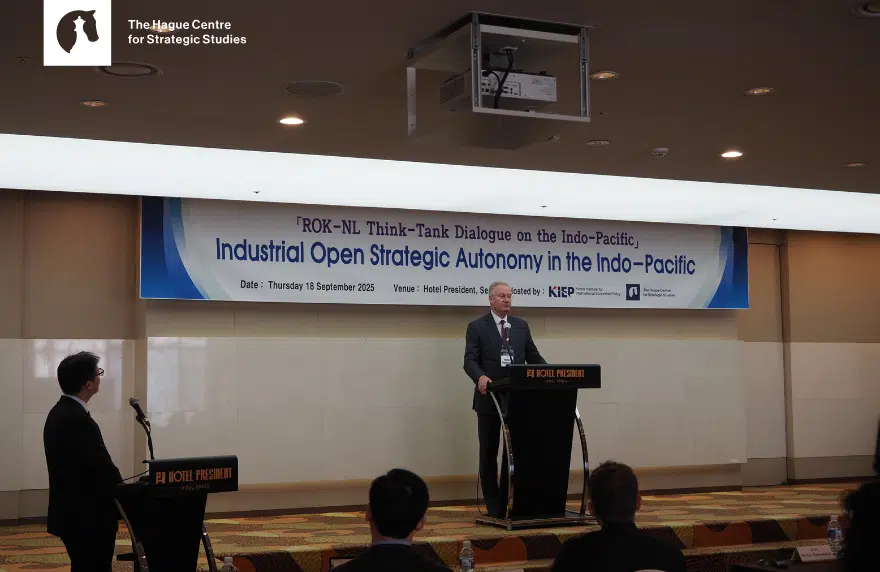
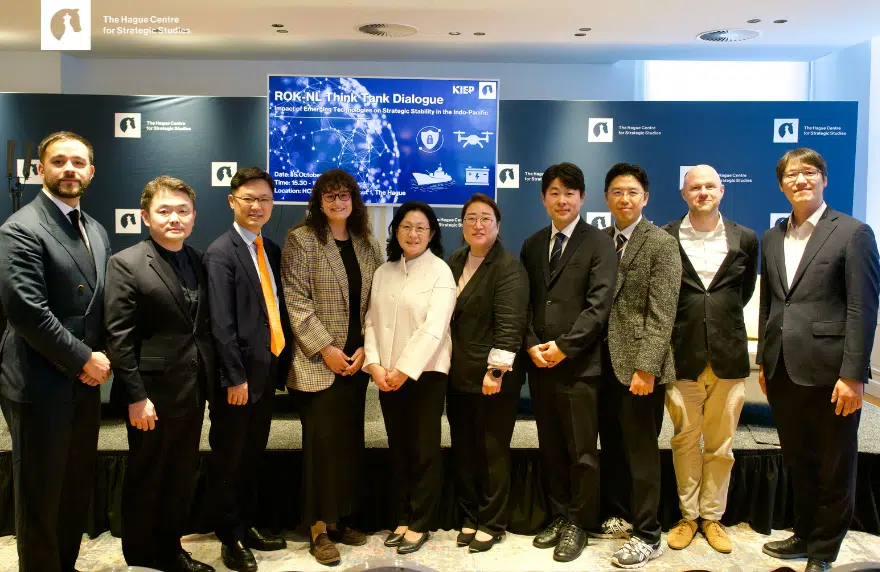
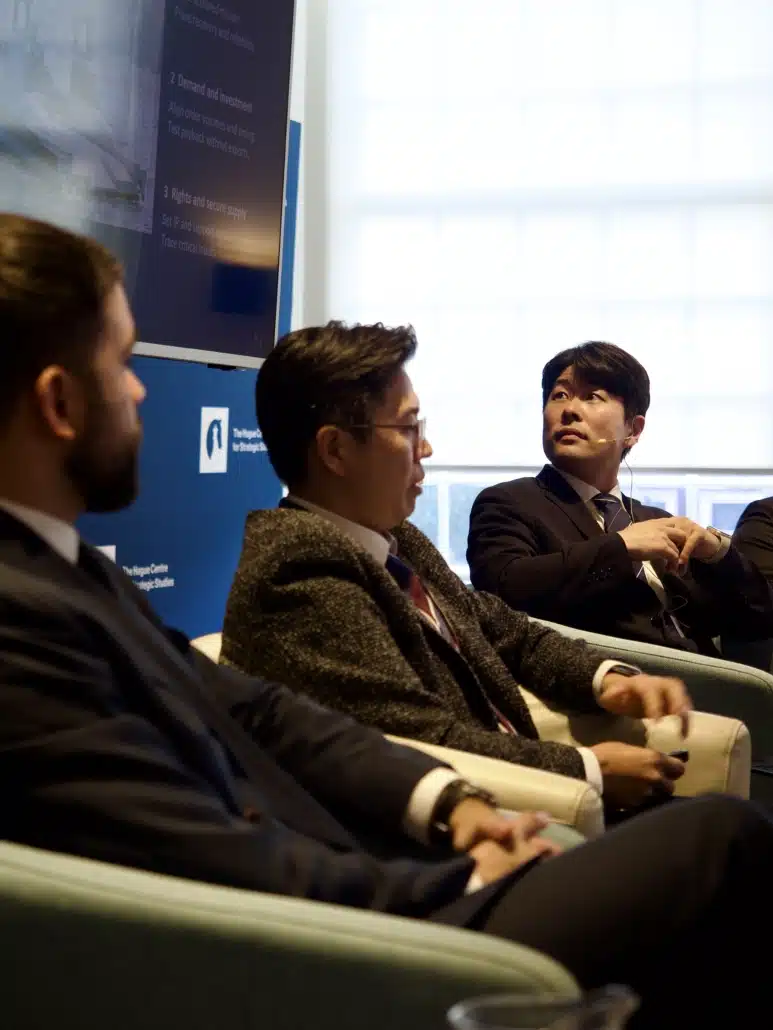
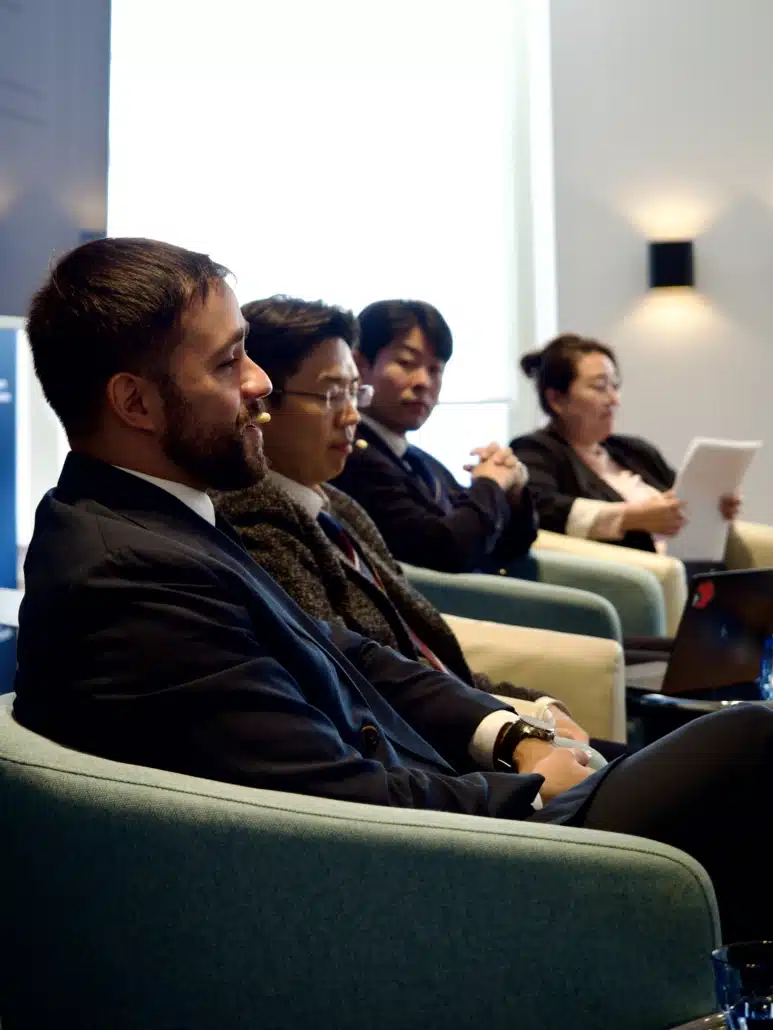
On 15 October 2026, The Hague Centre for Strategic Studies (HCSS) and the Korea Institute for International Economic Policy (KIEP) convened the ROK-NL Think-Tank Dialogue on the Indo-Pacific in The Hague. Bringing together Dutch and South Korean experts, the dialogue explored the impact of emerging technologies on strategic stability in the Indo-Pacific, with a particular focus on defence industrial strategies, technological innovation and opportunities for bilateral cooperation.
Against the backdrop of an evolving security environment and rapid technological developments, the dialogue provided an opportunity to exchange perspectives on the challenges and opportunities facing the Netherlands and the Republic of Korea (ROK). Discussions centred on how defence industrial policies and emerging technologies are reshaping military capabilities, strategic dependencies and opportunities for international cooperation.
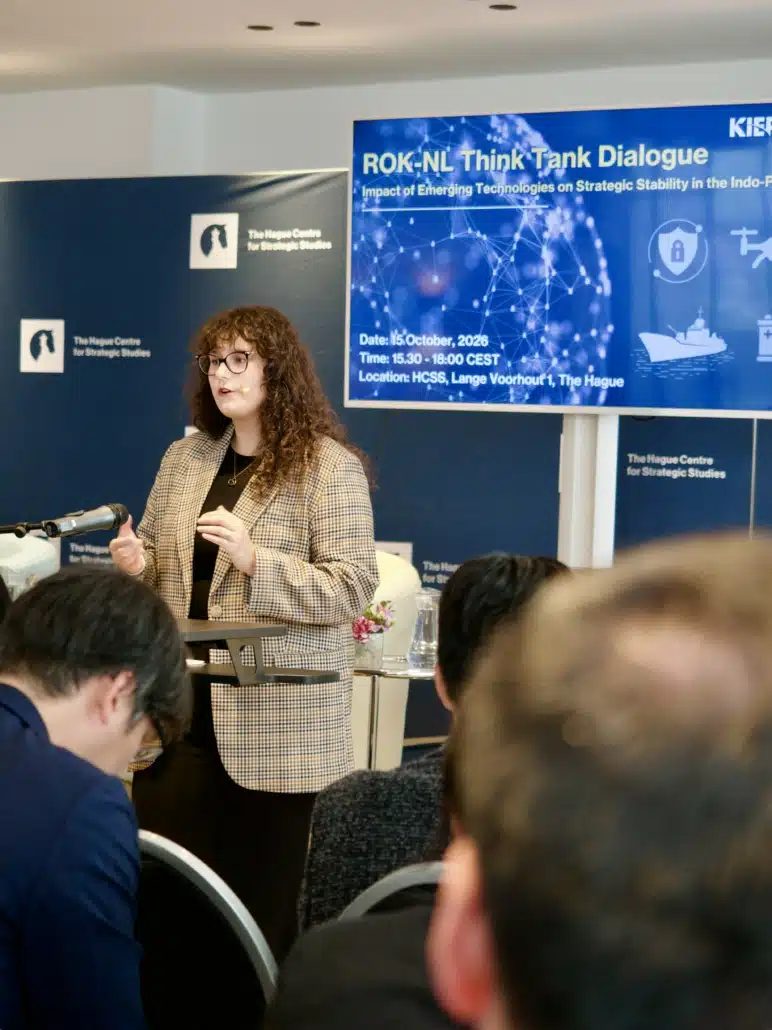
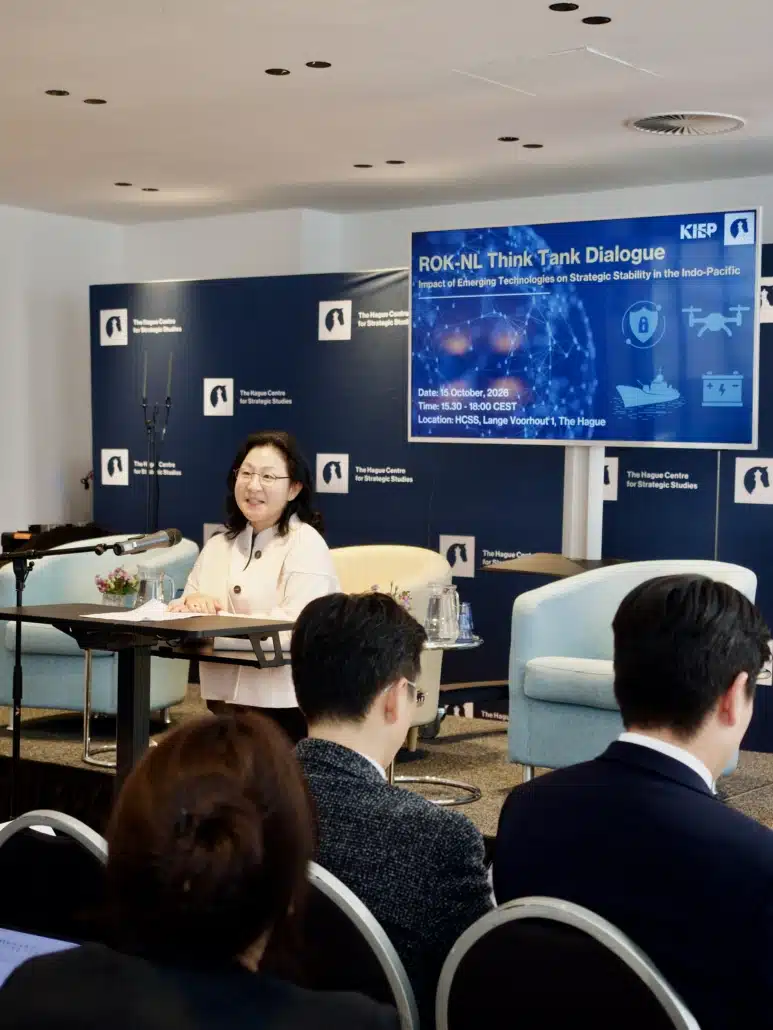
The event opened with welcoming remarks by Benedetta Girardi, Programme Coordinator of HCSS Europe in the Indo-Pacific Programme and introductory remarks by Dr. Seungshin Lee, Executive Director of KIEP.
Defence Industrial Strategies and Bilateral Cooperation
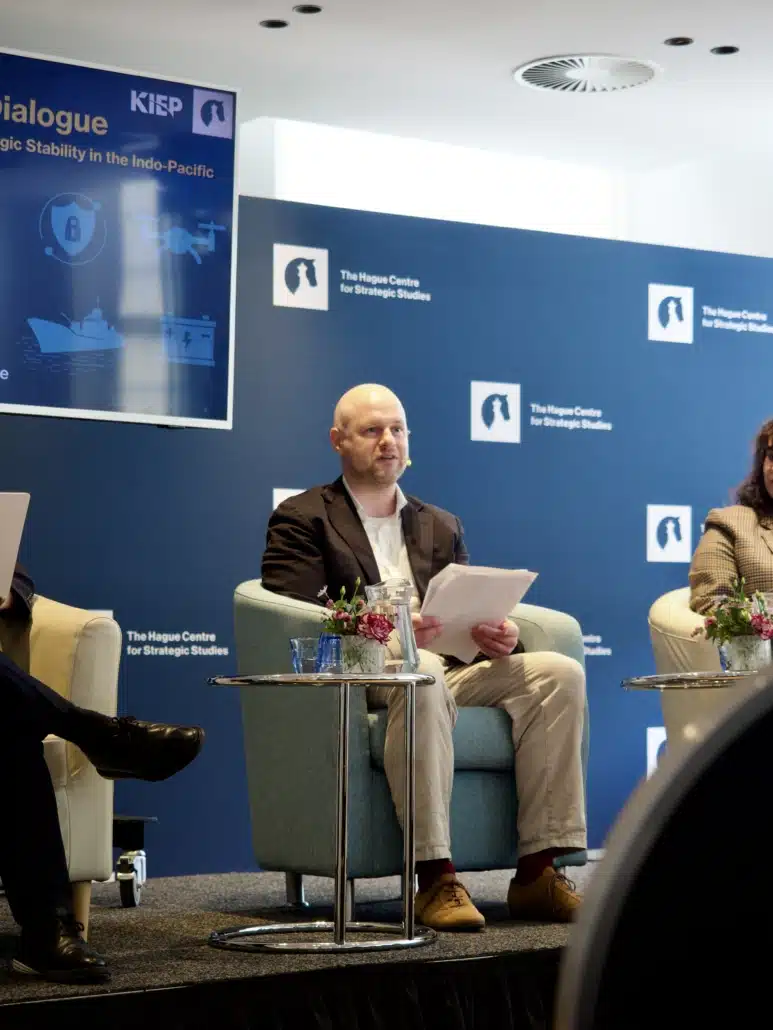
The first panel, moderated by Benedetta Girardi (HCSS), examined key policies shaping strategic stability in the Indo-Pacific, with particular attention to national defence industrial strategies and the military applications of artificial intelligence.
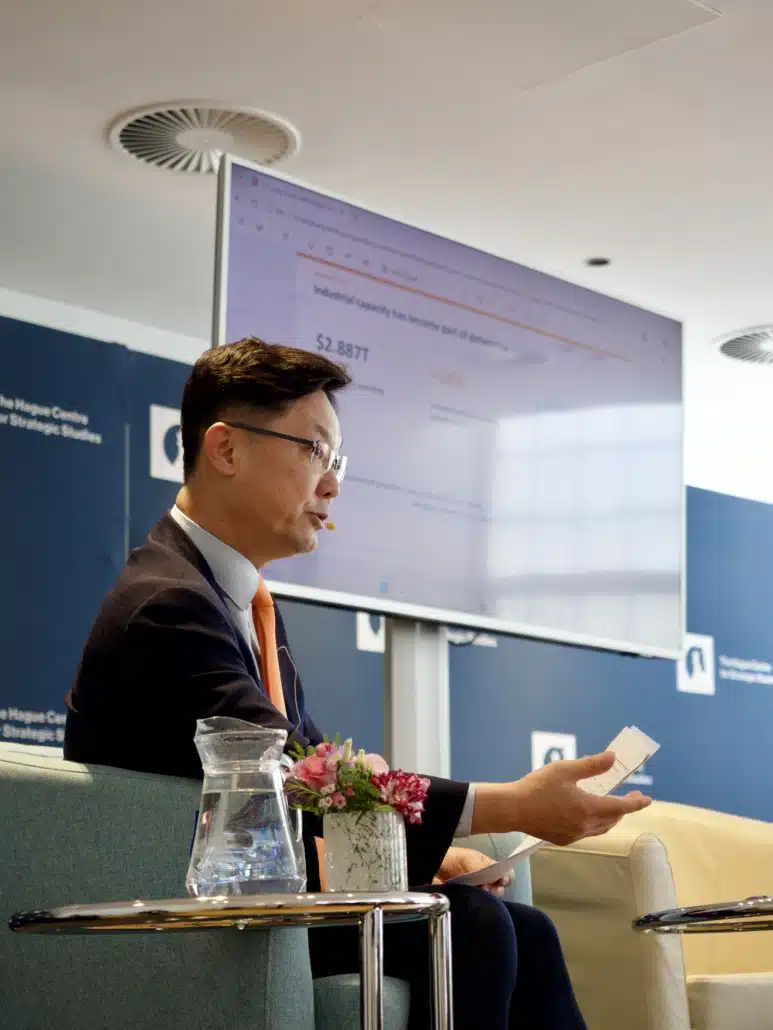
Prof. Won-joon Jang (Jeonbuk National University) and Dr. Friso Stevens (HCSS) presented perspectives on South Korea’s and the Netherlands’ respective defence industry strategies. Their contributions provided a basis for comparing national approaches to strengthening defence industrial capabilities and considering potential areas of convergence between the two countries.
Dr. Jihoon Yu (Korea Institute for Defense Analyses) addressed opportunities for ROK-NL cooperation on the military use of artificial intelligence. The topic highlighted the growing importance of emerging technologies in defence policy and the relevance of bilateral exchanges on their development and application.
Together, the presentations framed a broader discussion on how the Netherlands and South Korea can navigate an increasingly complex security environment while exploring opportunities for closer defence industrial and technological cooperation.
Emerging Technologies and Strategic Stability
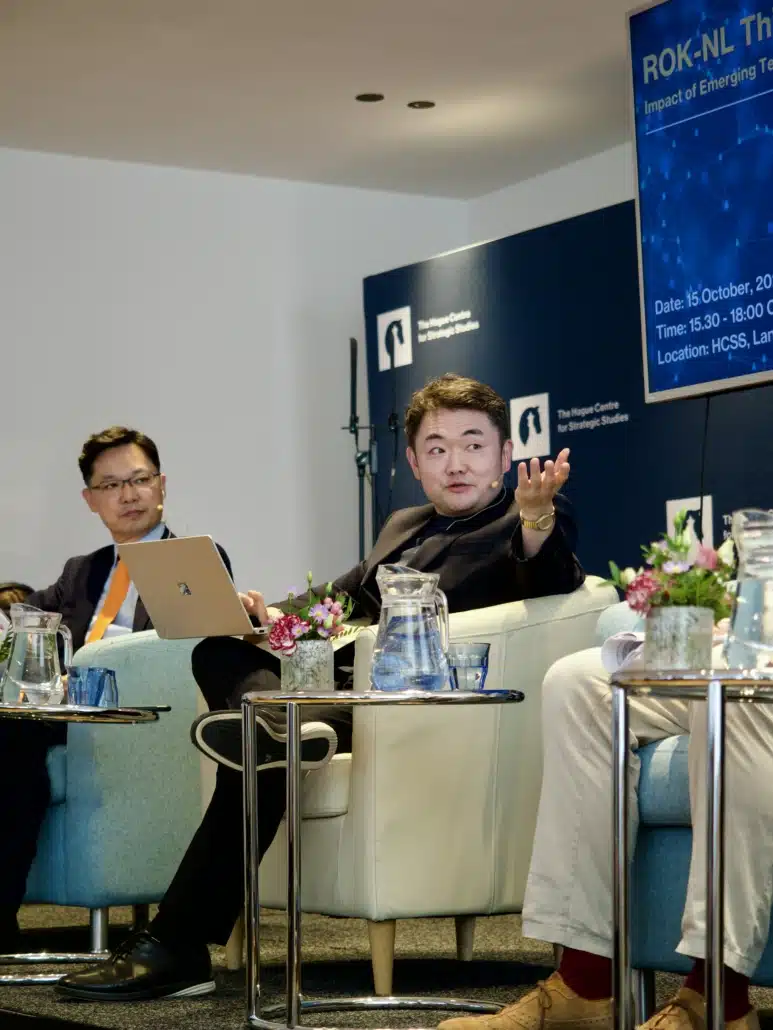
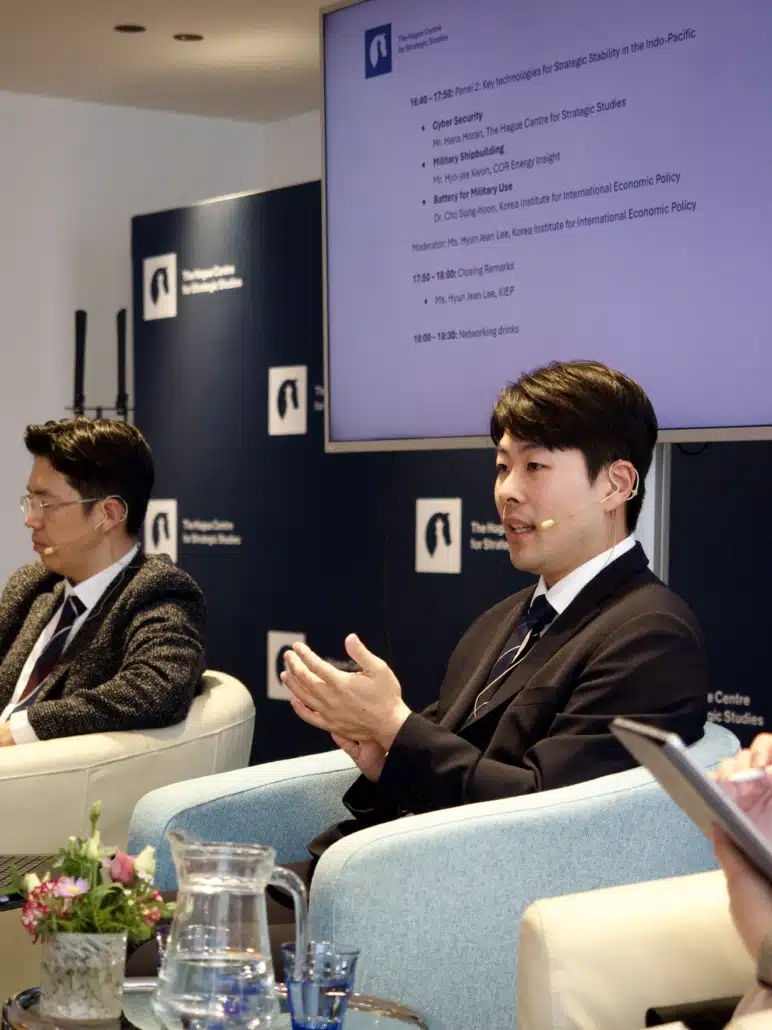
The second panel, moderated by Hyun Jean Lee (KIEP), shifted the focus towards specific technologies and industrial capabilities relevant to strategic stability in the Indo-Pacific.
Hans Horan (HCSS) addressed cybersecurity, an increasingly important dimension of national security and military resilience. Hyo-jae Kwon (COR Energy Insight) examined military shipbuilding, a sector of particular relevance to maritime security and defence industrial capabilities. Dr. Sunghun Cho (KIEP) focused on batteries for military applications, highlighting a technological area relevant to the energy requirements of modern defence systems.
The panel brought together perspectives from different technological and industrial sectors, illustrating the breadth of capabilities relevant to contemporary defence readiness. It also provided a framework for considering how technological developments, industrial capacity and supply-chain dependencies intersect with broader strategic stability concerns.
The dialogue concluded with closing remarks by Hyun Jean Lee (KIEP), followed by a networking reception that offered participants an opportunity to continue their exchanges.
Key Takeaways
The dialogue highlighted three overarching themes for further consideration:
1. Defence industrial cooperation is an important dimension of ROK-NL strategic relations.
The Netherlands and South Korea bring different industrial capabilities and strategic perspectives to the discussion. Comparing their defence industrial strategies offers a useful starting point for identifying complementary strengths, shared challenges and potential opportunities for bilateral cooperation.
2. Emerging technologies are increasingly intertwined with strategic stability.
From military applications of artificial intelligence to cybersecurity, shipbuilding and battery technologies, technological developments have significant implications for defence capabilities and preparedness. Understanding these developments requires attention not only to technological innovation but also to their strategic and industrial implications.
3. Sustained dialogue can help identify concrete areas for future cooperation.
The range of issues addressed during the event underlined the value of exchanges between Dutch and South Korean policy and research communities. Continued engagement can help deepen mutual understanding, identify shared priorities and explore opportunities for cooperation in defence-related technologies and industrial capabilities.
Strengthening ROK-NL Strategic Dialogue
The ROK-NL Think-Tank Dialogue provided a valuable platform for exchanging perspectives on the evolving security environment in the Indo-Pacific and the implications of emerging technologies for defence and strategic stability.
By connecting expertise on defence industrial policy, artificial intelligence, cybersecurity, military shipbuilding and energy technologies, the event contributed to strengthening the dialogue between Dutch and South Korean experts and laid the groundwork for further exchanges on shared strategic challenges.



Related Content