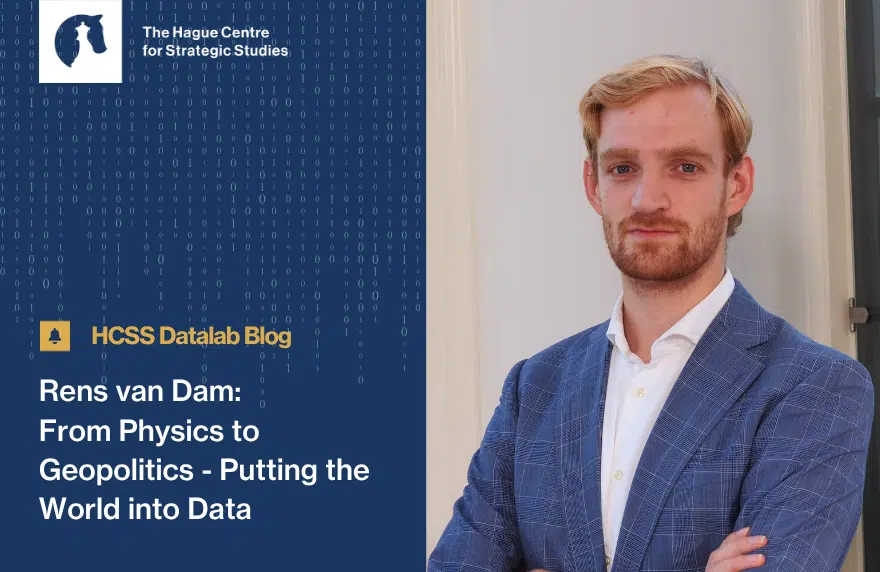
In this second instalment of our HCSS Datalab series, we speak with Rens van Dam, Research Scientist at HCSS, about applying quantitative methods to geopolitics. From causal modelling and regression analysis to natural-language processing and generative agent-based modelling, Rens explains how data can help answer questions that are difficult to approach through traditional research methods alone, and why human expertise remains essential.
What does your role in the Datalab involve?
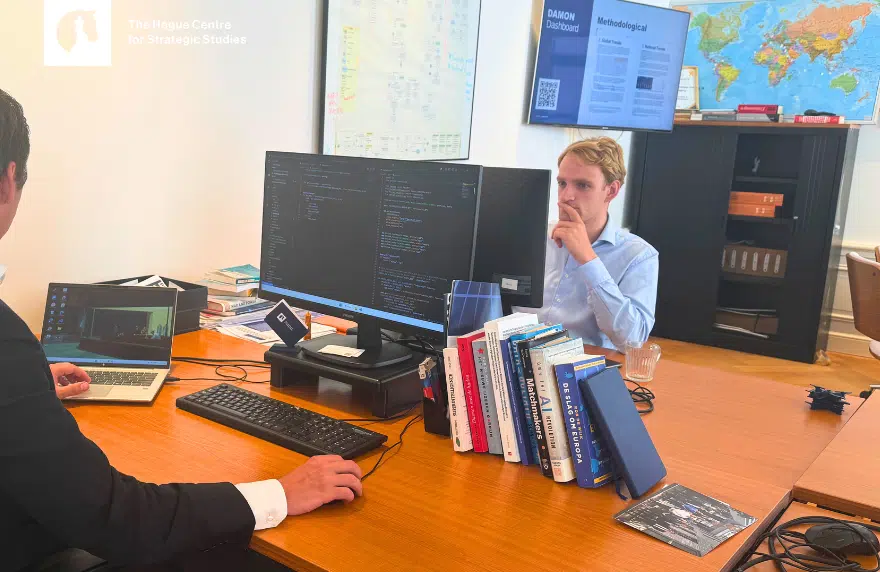
As a Research Scientist, I apply our portfolio of quantitative methods to the topics we study at HCSS. That is a real challenge. It is rather unusual for a think tank working on national and international strategy to have a Datalab, yet we are constantly looking for ways to use data to better explain the world and create the data-driven intelligence policymakers need to make informed decisions.
Alongside my quantitative work, I also contribute to applied economic analysis in areas such as defence and critical infrastructure.
What are the best uses of data for think tank research?
As a physicist and economist, I know that we can express much of the world around us in data. The movement of planets, the vibration of atoms and the trajectory of a rocket are all phenomena that we can, with some confidence, put into numbers.
The same is true in economics. Given good-quality data, we can draw conclusions and provide analysis to those making decisions about who gets what, where and how. But when it comes to geopolitics, quantitative data is often scarce. We make use of what is available to, for example, build causal models, analyse system dynamics and run regressions.
Much of our work, however, involves another kind of data: text. News articles, think tank reports, Open Telegram channels covering conflicts, United Nations speeches – textual data is everywhere in this field. With the advent of large language models, combined with a lot of clever software engineering, we are increasingly able to turn this information into actual intelligence.
Another application we are currently exploring is the simulation of geopolitical scenarios using generative agent-based modelling. We can use our databases to simulate scenarios and test hypotheses. This is still in its early stages, but this type of simulation looks very promising.
Are there certain questions or challenges that data can help us explore in ways that traditional research methods cannot?
Doing literature reviews of thousands of articles and summarising the key developments is something that was formerly impossible. Now, these types of research are possible.
However, an analyst will remain necessary! Not only for obvious reasons like validation and presentation, but I believe the addition of human domain expertise is invaluable and not something that can be replaced.
What’s your favourite tool or technology to work with, and why?
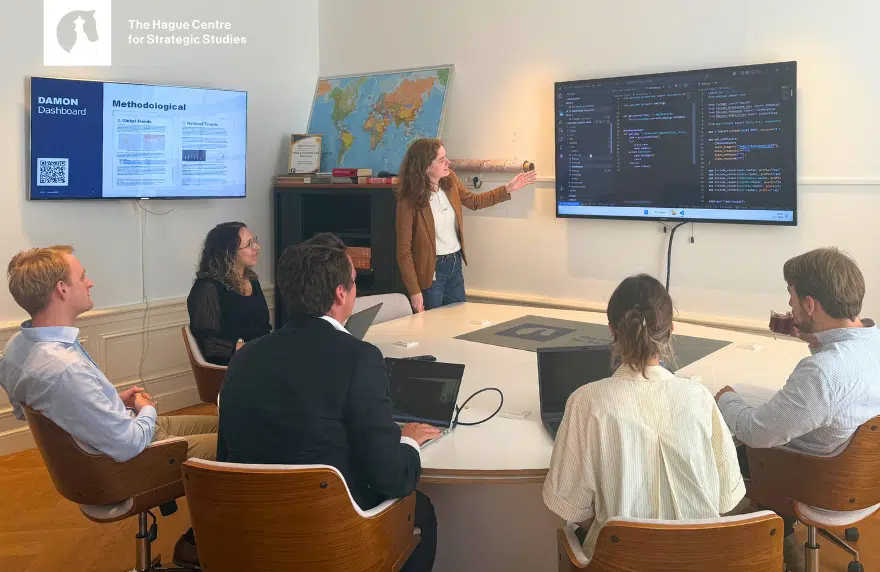
We have built an internal chat tool at HCSS where we can ask questions, search our databases and brainstorm.
One of the things I particularly like is that the tool allows us to select between different model providers. That’s critical when you are trying to prevent a ‘vendor lock-in’, keep data privacy and want to stay up to date on multiple model’ qualities.
I like how that tool can keep evolving with new features and making our work easier without being too dependent on one external model provider.
What’s one thing you’ve learned since joining the Datalab?
The Datalab is very dynamic. Because of its scale and structure, we can adopt new research methods very quickly.
I learnt that this is very valuable: it gives us the ability to experiment with cutting-edge analytical approaches and apply them to real-world questions in defence, security and geopolitics.
In particular, we have developed substantial capabilities in processing and analysing large amounts of textual data for geopolitical research. Being able to combine rapidly evolving technology with our subject matter expertise is one of the things that makes working in the Datalab so interesting.
Experts
Related Content