
HCSS
  • News
    • BNR | De Strateeg
    • Columns
    • Events
    • HCSS Newsletter
    • Podcasts
  • Publications
    • Publications
      • All Projects
      • All Publications
    • Geopolitics & Governance
      • Transatlantic Relations
      • Russia & Eurasia
      • Europe in the Indo-Pacific
      • AI in the Military Domain
      • PROGRESS / Strategic Monitor
    • Economics & Technology
      • Emerging Technologies
      • Critical Materials
      • Energy Security
    • Defence & Security
      • On Future War
      • Deterrence and Arms Control
      • Hybrid Threats
      • Cyber Security
    • Society & Resilience
      • Nationale Veiligheid en Weerbaarheid
      • Publieksmonitor Maatschappelijke Stabiliteit
      • Transnational Organised Crime
      • Strategic Monitor Dutch Police
    • Climate, Water & Food
      • Climate Security
      • Water, Peace & Security (WPS)
      • Food Security
  • Dashboards
    • Dashboards
      • All Tools
        • GINA
        • SARA
    • Geopolitics & Governance
      • DFRI
      • GINA | Diplomatic
      • GINA | Information
      • CLARIS
    • Economics & Technology
      • DOMINO
      • GATRI
      • GINA | Economic
      • Cyber Arms Watch
      • Cyber Comparator
      • Cyber Norms Observatory
      • Cyber Transparency
    • Defence & Security
      • GINA | Military
      • Nuclear Timeline
    • Society & Resilience
      • DAMON
    • Climate, Water & Food
      • Agrifood Monitor
      • CARMEN
      • CRM Dashboard
  • Leadership Practice
    • HCSS Leadership Practice
    • HCSS Boardroom
    • Strategic Negotiations Course
    • Serious Gaming
    • IDCSS | Indo-Dutch Cyber Security School
    • SANCS | Southern Africa-Netherlands Cyber Security School
  • About HCSS
    • Contact Us
    • HCSS Datalab
    • Our People
    • Funding & Transparency
    • Internship Programme
    • Press & Media Inquiries
    • Studio HCSS
    • Working at HCSS
    • Global Futures Foundation
  • Click to open the search input field Click to open the search input field Search
  • Menu Menu

News

As Germans prepare to vote, a mystery grows: Where are the Russians?

September 11, 2017

In 2015, suspected Russian hackers broke into the computer networks of the German Parliament and made off with a mother lode of data — 16 gigabytes, enough to account for a million or more emails. Ever since, German politicians have been watching nervously for the fruits of that hack to be revealed, and for possible embarrassment and scandal to follow. Many warily eyed September 2017 — the date of the next German election — as the likely window for Russian meddling to once again rattle the foundations of a Western democracy.

But with the vote only two weeks away — and with Russian President Vladimir Putin’s European nemesis, Chancellor Angela Merkel, seemingly on track for a comfortable win — the hacked emails haven’t materialized. Nor have Russian-linked propaganda networks churned into overdrive with disinformation campaigns. Even Kremlin-orchestrated bots — blamed for the viral spread of fake news in last year’s U.S. presidential campaign — have been conspicuously silent.

The Washington Post spoke about the matter with Sijbren de Jong. The full article can be read here.

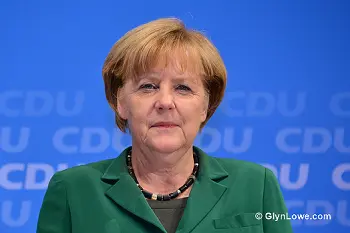
Photo credit: Glyn Lowe Photoworks. via Foter.com / CC BY

  • Share on Facebook
  • Share on X
  • Share on WhatsApp
  • Share on LinkedIn
  • Share by Mail

Experts

Related News

Related Content

Fake News, Fake Ukrainians: How Russians Tilted a Dutch Vote
CNBC | Han ten Broeke: Wilders victory in Dutch EU vote is an indicator of Sunday’s wider election result
IMCCS issues reports: Prepare for escalating Climate Risks in Asia

Office Address

  • The Hague Centre for Strategic Studies
  • Lange Voorhout 1
  • 2514 EA The Hague
  • The Netherlands

Contact Us

  • Telephone: +31(70) 318 48 40
  • E-mail: info@hcss.nl
  • IBAN NL10INGB0666328730
  • BIC INGBNL2A
  • VAT NL.8101.32.436.B01
  • Contact

Legal & Privacy

  • Disclaimer & Privacy
  • Algemene Voorwaarden 2024 (NL) 
  • Terms & Conditions 2024 (ENG) 
  • Algemene Voorwaarden 2026 (NL) 
  • Terns & Conditions 2026 (EN) 
  • Coordinated Vulnerability Disclosure
  • Ethical Standards
  • Manual for Responsible Use of AI

Follow us

© The Hague Centre for Strategic Studies
    Link to: Radio Free Europe Podcast on China’s New Silk Road Link to: Radio Free Europe Podcast on China’s New Silk Road Radio Free Europe Podcast on China’s New Silk Road Link to: Foreign and security policy starts at home: the consequences of the PopSov revolution Link to: Foreign and security policy starts at home: the consequences of the PopSov revolution Foreign and security policy starts at home: the consequences of the PopSov ...
    Scroll to top Scroll to top Scroll to top

    GDPR Consent

    Your privacy is important to us. Here you can set which consent you are allowing us with regards to the collection of general information, the placing of cookies of the collection of personal information. You can click 'Forget my settings' at the bottom of this form to revoke all given consents.

    Privacy policy | Close
    Settings

    GDPR Consent Settings

    Your privacy is important to us. Here you can set which consent you are allowing us with regards to the collection of general information, the placing of cookies of the collection of personal information. You can click 'Forget my settings' at the bottom of this form to revoke all given consents.

    Website statistics collect anonymized information about how the site is used. This information is used to optimize the website and to ensure an optimal user experience.

    View details

    Functional cookies are used to ensure the website works properly and are neccessary to make the site function. These cookies do not collect any personal data.  

    View details
    Forget my settings Deleted!