Publications

Over the years, HCSS has built up an extensive archive of reports, monitors, papers and other publications. We disseminate the results of our research as broadly as possible to benefit the public good. Use the advanced search functions below to browse through our research library, most of which is available as free PDF downloads.

19 Nov 2025
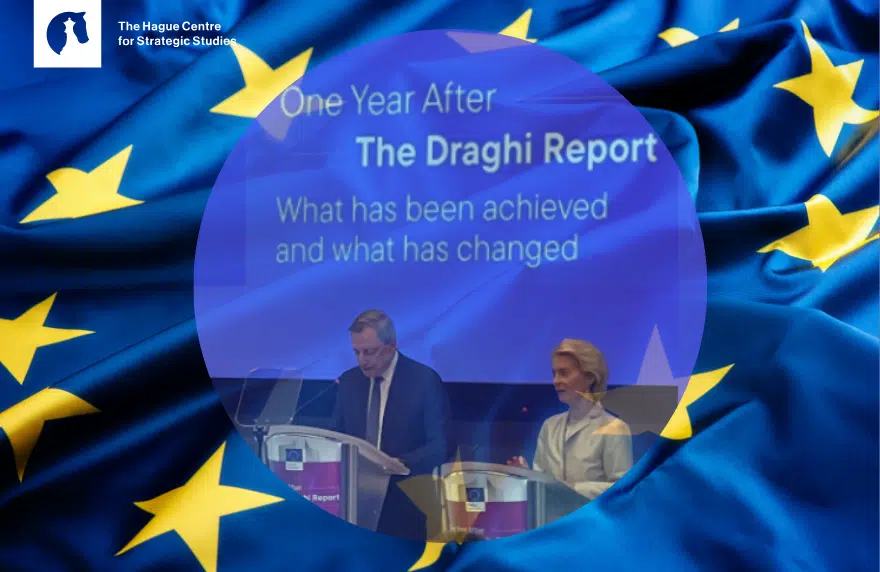
One year after Mario Draghi’s landmark report, HCSS launches Draghi Revisited, the second edition of its Draghi Report Series. Despite rising political attention, Europe remains dependent in key defence, raw materials, cleantech and digital sectors, while global pressures intensify. Following the impact of their initial series, HCSS analysts Ron Stoop and Berend Kwak were invited to the European Commission’s conference marking the report's anniversary, and now return to assess how far Europe has advanced toward industrial, technological and economic sovereignty. This new edition revisits Draghi’s warnings sector by sector, reviewing the EU’s concrete steps over the past year.
18 Nov 2025
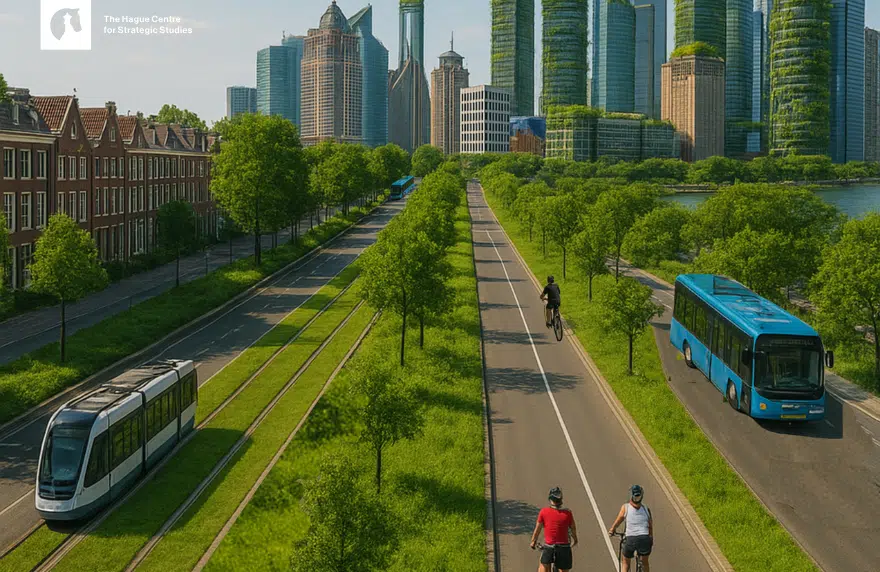
How do China and the Netherlands translate their sustainability ambitions into policy and how can cooperation on the green transition be intensified? This new HCSS report compares the Dutch and Chinese approaches to green policymaking, revealing shared priorities across the domains of physical connectivity, environmental quality and human wellbeing, and resilience and adaptability. The study identifies how both countries can complement each other to accelerate the green transition, by focusing on pilot projects, knowledge exchange, and integrated spatial planning, among others.
12 Nov 2025
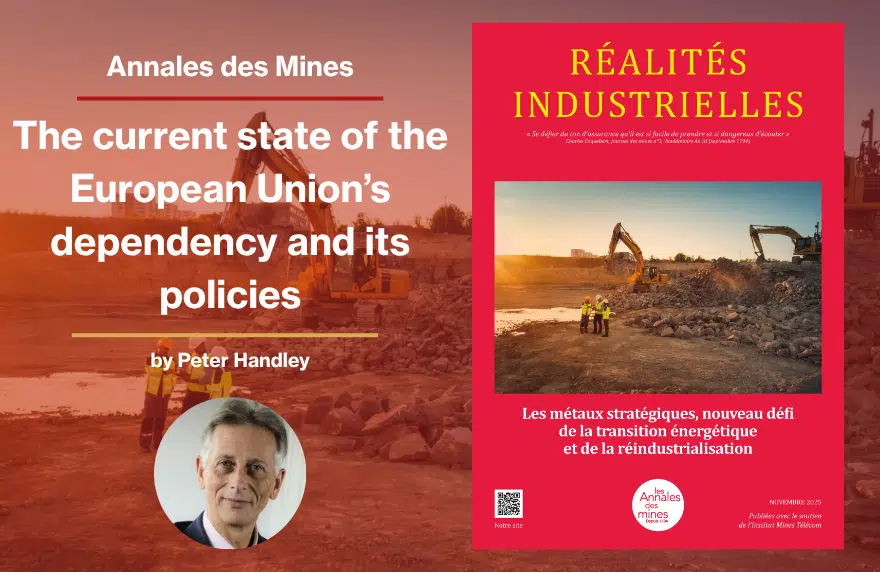
In an article for Les Annales des Mines, HCSS strategic advisor Peter Handley examines how the EU’s efforts to reduce strategic dependencies — from energy to defence — have paradoxically coincided with rising import reliance. As China tightens export controls and the US races ahead with industrial policy, Handley argues that Europe must urgently shift from awareness to action to secure critical raw materials — and with them, its strategic autonomy.
10 Nov 2025
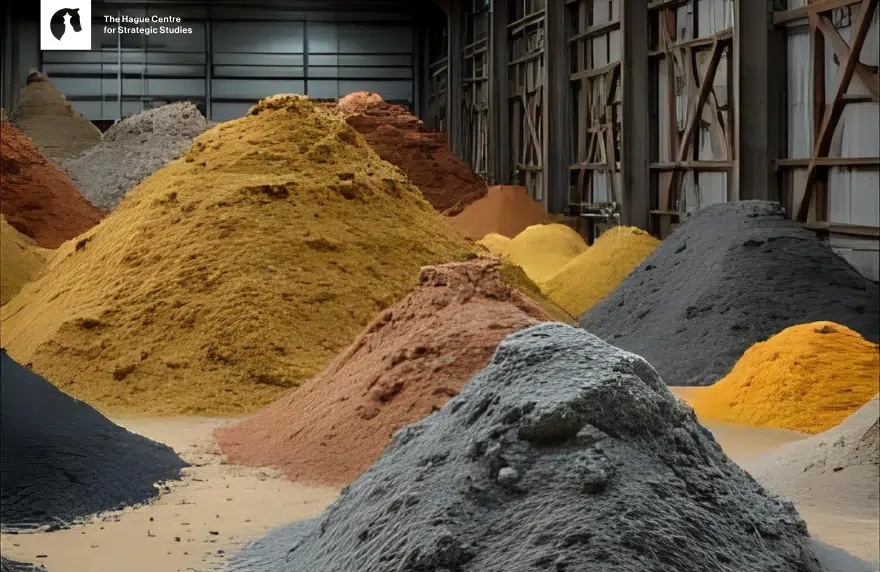
From batteries to hydrogen: Europe’s clean tech future depends on secure, sustainable material supply. A new HCSS report explores how public-private collaboration on voluntary critical raw material stockpiles can strengthen the resilience and sustainability of the Dutch and European clean tech sectors. The study by Irina Patrahau and Ron Stoop proposes a four-step model and actionable recommendations for building voluntary stockpiles that support SMEs, promote ESG sourcing, and align with EU strategic autonomy goals.
28 Oct 2025
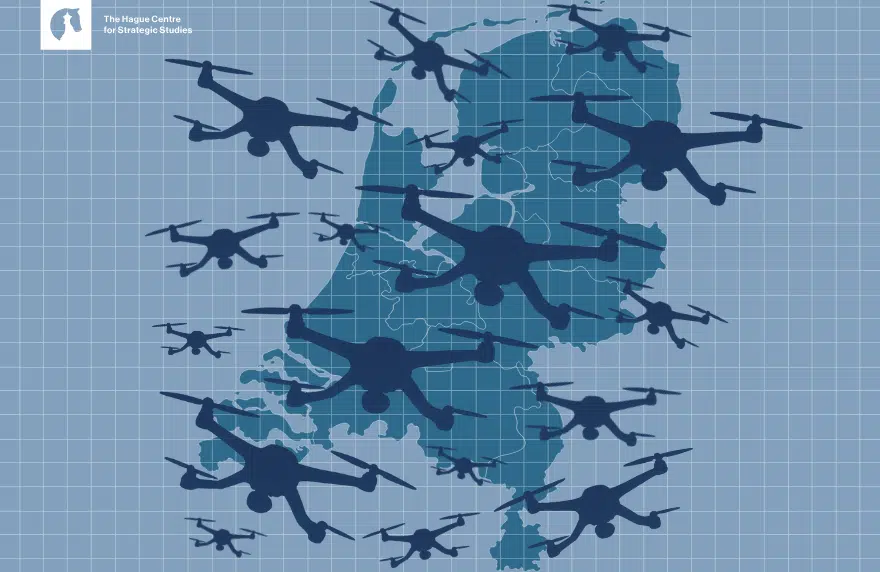
New policy brief by HCSS senior fellow Friso Stevens: Europe’s next land war will be shaped by massed UAVs. The Royal Netherlands Army should build a resilient, AI-enabled loitering UAV capability and a domestic industrial base to scale rapidly in crisis. Read the policy options and concrete industrial steps for Dutch defence.
15 Oct 2025
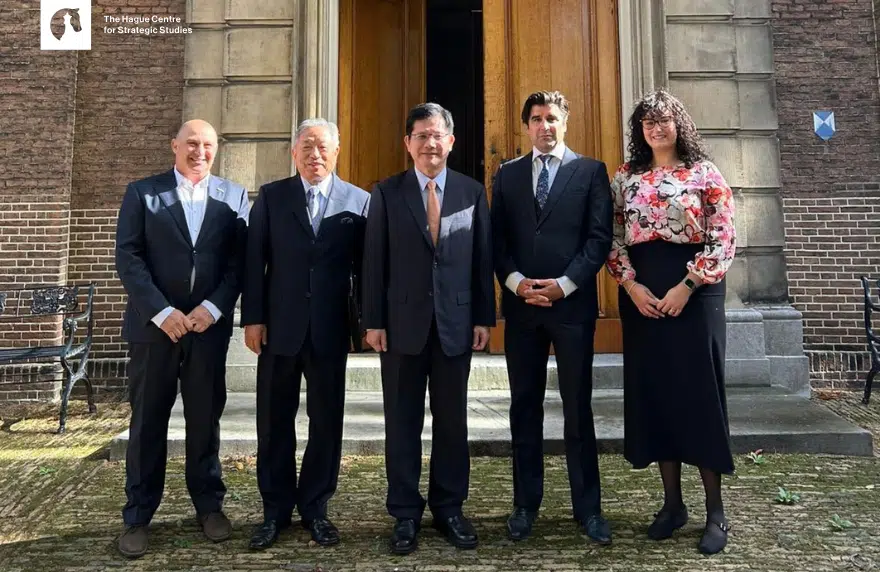
On 15 September 2025, HCSS had the honour of hosting His Excellency the Minister of Foreign Affairs of Taiwan, for a closed-door luncheon. The discussion focused on “Taiwan’s Role in the Strategic Reindustrialization of Europe.” Conversations explored the geopolitical aspects of reindustrialization, the development of democratic and resilient supply chains, and opportunities for enhanced cooperation between Taiwan and the Netherlands within the ReArm Europe framework. The exchange offered valuable insights into the evolving role of Taiwan in Europe’s strategic landscape and highlighted the importance of strengthening partnerships among like-minded democracies.
14 Oct 2025
As global power dynamics shift toward multipolarity, India’s challenge lies not in adaptation, but in shaping the new order. A new HCSS Snapshot, Old Players, New Moves: India’s Strategy in the Shanghai Cooperation Organisation, explores how India can turn its SCO membership into strategic advantage. Authors Anna Hoefnagels and Benedetta Girardi assess whether the opportunities of SCO membership outweigh its challenges—and how India’s strategic moves today can shape the rules of tomorrow’s global game. The paper identifies three key pathways for India to strengthen its regional role and influence the emerging multipolar order.
9 Oct 2025
In September, Strategic Analyst Fiona De Cuyper attended the 2025 Arctic Security Conference in Oslo, Norway. The event brought together a diverse group of global participants, including academics, government and business representatives, Indigenous peoples, and locals from northern communities. This year, the central theme of the conference was “Managing Polarisation and Fragmentation”, with sessions focused on great power competition in the High North, the relevance of Arctic cooperative institutions, the state of conflict in the region, the local aspect of security considerations, and the role of non-Arctic states. Fiona’s reflections and insights from the conference are presented below.
7 Oct 2025
Greenland’s critical raw materials are attracting global attention – but will the EU and US step up, or will China fill the void? Assistant analyst Julie Jeuken investigates EU and US bilateral engagements with Greenland, finding that both share similar goals yet fall short of Nuuk's expectations. The snapshot calls for a Greenland-centred approach to transatlantic cooperation: aligning efforts with the island’s ambitions, leveraging renewable energy in mining, and coordinating with countries already active in the sector.
6 Oct 2025
The Water, Peace and Security (WPS) partnership explores the growing role of defence and security actors—the “fourth D” alongside development, disaster relief and diplomacy—in addressing water-related security risks. Based on literature review and expert interviews in Iraq, Mali, Ethiopia and Kenya, this new WPS policy brief by HCSS analysts Lennart Engel and Thijs van Aken examines their complex role in fragile, water-stressed contexts and identifies key opportunities, challenges, and three priority actions for more effective and responsible engagement.
30 Sep 2025
De Najaarspeiling van de HCSS Publieksmonitor laat zien dat maatschappelijke stabiliteit in Nederland broos blijft. Nederlanders beoordelen deze met een 6,1, lager dan in de zomer. Interne spanningen en zorgen over de werking van de democratie nemen toe, terwijl vertrouwen in de overheid laag blijft. Tegelijkertijd zien veel Nederlanders hun buurt als bron van veerkracht. Lees nu de belangrijkste bevindingen.
24 Sep 2025
The responsible development and use of AI in the military domain requires informed human decisions and context-specific approaches to designing, testing, and deploying these technologies in ways that uphold values of peace and human dignity. With this report, GC REAIM proposes modalities for global cooperation to foster warranted trust in the responsible use of AI systems, paving the way towards the institutionalization of governance for AI in the military domain.
22 Sep 2025
The sixth edition of the ‘Observer’, analysing the results of the HCSS Socio-Political Instability Survey, continues to monitor high levels of instability in Western Asia and Eastern Europe, caused by the war in Ukraine and the conflict in Gaza. The escalation of the conflict between Israel and Iran followed by American airstrikes on the Fordow nuclear plant weakened the Ayatollah's reign, bringing Iran to the top of the list of countries most at risk of further socio-political instability. Consequentially, military factors are once again seen as the main driver of global socio-political instability, once again surpassing economic factors now the unease and uncertainty surrounding US trade has receded into the background.
18 Sep 2025
What are the opportunities for Dutch industry in the global e-SAF supply chain? With EU climate targets driving demand for synthetic aviation fuels, the Netherlands can leverage its strong capabilities and international partnerships to secure sustainable solutions. The Netherlands is well-positioned with its technical expertise, energy hub role, and strong international ties—but high costs mean global partnerships are key. This new HCSS study highlights opportunities in Sweden, Spain, France, Canada, Morocco, Brazil, and Saudi Arabia, and offers concrete recommendations for government and industry.
11 Sep 2025
No EU country can be self-sufficient in critical raw materials. But regions like Noord-Holland & Flevoland can lead in recycling, innovation & circularity. This new HCSS report by Irina Patrahau, Lucia van Geuns, Ron Stoop, and Julie Jeuken highlights how regional actors—from ports to recycling companies—can strengthen Europe’s security of supply amid growing global competition for critical raw materials. It identifies vulnerabilities and outlines five key opportunities for building circular, sustainable CRM supply chains.
11 Sep 2025
De energietransitie, digitale technologie en defensie zijn afhankelijk van kritieke grondstoffen (CRM). In een nieuw HCSS-rapport analyseren Irina Patrahau, Lucia van Geuns, Ron Stoop en Julie Jeuken hoe Noord-Holland en Flevoland hun rol kunnen versterken binnen mondiale CRM-toeleveringsketens. De studie schetst kwetsbaarheden, kansen en beleidsopties om de regio veerkrachtiger en duurzamer te maken.
9 Sep 2025
Why did so many Western governments fail to anticipate Russia’s 2022 invasion of Ukraine, despite all the warning signs? Based on 44 interviews and in-depth analysis, this groundbreaking new HCSS report by Tim Sweijs, Thijs van Aken, Julie Ebrard, Philippe van Pappelendam and Anna Hoefnagels reveals how psychological and cognitive biases distorted policymakers’ threat perception — with far-reaching consequences.
2 Sep 2025
Bijna de helft van de Nederlanders ziet in crisistijden meer in een sterke leider dan in een compromisgerichte regering. Deze HCSS Focus onderzoekt de voedingsbodems van autocratisch sentiment: frustratie over democratie, wantrouwen in instituties, angst en onzekerheid, en hang naar homogeniteit. Op basis van peilingen met KiesKompas en de HCSS Publieksmonitor biedt dit rapport inzicht in risico’s voor democratische weerbaarheid in Nederland.
24 Aug 2025
HCSS waarschuwt in het nieuwe rapport Van Meme Tot Moord: online extremistische subculturen kweken een nieuwe generatie van geweld. Jongeren raken verstrikt in digitale biotopen vol haat, geweld en antidemocratische denkbeelden. Analisten Gerben Bakker en Thijs van Aken beschrijven hoe memes, games en hybride ideologieën samensmelten tot een gevaarlijke voedingsbodem voor radicalisering – en wat we eraan kunnen doen.
19 Aug 2025
Batteries are central to the EU’s transition to a low-carbon economy. This paper analyses the geopolitical vulnerabilities arising from the three most widespread battery chemistries – Lithium Nickel Manganese Cobalt Oxide (NMC); Lithium Ferro Phosphate (LFP); and Sodium Ion Batteries (SIB) – on two timelines, 2025 and 2030 and provides three main takeaways for EU-based policymakers and industry actors.
8 Aug 2025
Can arms control survive when giving up nukes seems to invite risk and keeping them feels like the only reliable hedge? Assistant Analyst Elton Högklint traces this dilemma through four case studies—Ukraine, Libya, North Korea, and Iran—revealing systemic breakdowns in security guarantees, negotiation dynamics, policy continuity, and treatment of civilian nuclear aims. He proposes a revised framework to answer the central question: how do we make disarmament rational, credible and sustainable?
30 Jul 2025
Digitale rechtsextremistische subculturen vormen een reële en groeiende dreiging, ook in ons land. Wat is ‘Siege’ en waarom vormt deze extreemrechtse online subcultuur een toenemend geweldsrisico in Nederland? Een nieuwe HCSS Snapshot door Philippe van Pappelendam en Gerben Bakker duikt in het radicale gedachtegoed achter Siege, en laat zien hoe dit digitale ecosysteem een voedingsbodem vormt voor haat, geweld en maatschappelijke ontwrichting. Lees nu de volledige analyse.
22 Jul 2025
De eerste editie van de HCSS Publieksmonitor Maatschappelijke Stabiliteit is verschenen. De Zomerpeiling 2025 laat zien hoe Nederlanders maatschappelijke spanningen, dreigingen en veerkracht ervaren. Hoewel er vertrouwen is in de samenleving, signaleren burgers grote zorgen over politiek, polarisatie en internationale dreiging. Lees de belangrijkste bevindingen in deze eerste datagedreven momentopname van maatschappelijke systeemdruk.
22 Jul 2025
Hoe stabiel is de Nederlandse samenleving in de ogen van haar burgers? De nieuwe HCSS Publieksmonitor Maatschappelijke Stabiliteit meet hoe Nederlanders maatschappelijke spanningen, dreigingen en weerbaarheid ervaren. Deze unieke peiling helpt beleidsmakers, de politie en andere professionals bij het versterken van strategisch inzicht en democratische veerkracht. Lees meer over het concept en de toepassing van dit nieuwe instrument in deze Scoping Paper.

© The Hague Centre for Strategic Studies