Research
The North Sea has become a strategic domain where economic, ecological, and security interests converge. In a new HCSS study, Frank Bekkers and Pieter-Jan Vandoren demonstrate that these interests do not merely compete with one another, but can also be mutually reinforcing – provided that policy and implementation are better integrated.
The analysis shows that the deteriorating security environment and the rapid expansion of offshore infrastructure, such as wind farms and cable networks, are creating new vulnerabilities. At the same time, these developments offer opportunities to leverage investments in security for nature restoration and improved ecological understanding.
At the heart of the study is the concept of a shared information chain. Through sensor networks, data sharing, and joint analysis, stakeholders can develop a layered maritime situational picture of the North Sea – ranging from real-time monitoring to scenario analysis looking ahead to 2050. This supports both the protection of critical infrastructure and effective ecological management.
“The North Sea does not require two separate agendas, but a single integrated approach. The technology and resources already exist – the challenge lies in connecting systems, interests, and responsibilities,” says lead author Frank Bekkers.
The study identifies six concrete opportunities for cooperation:
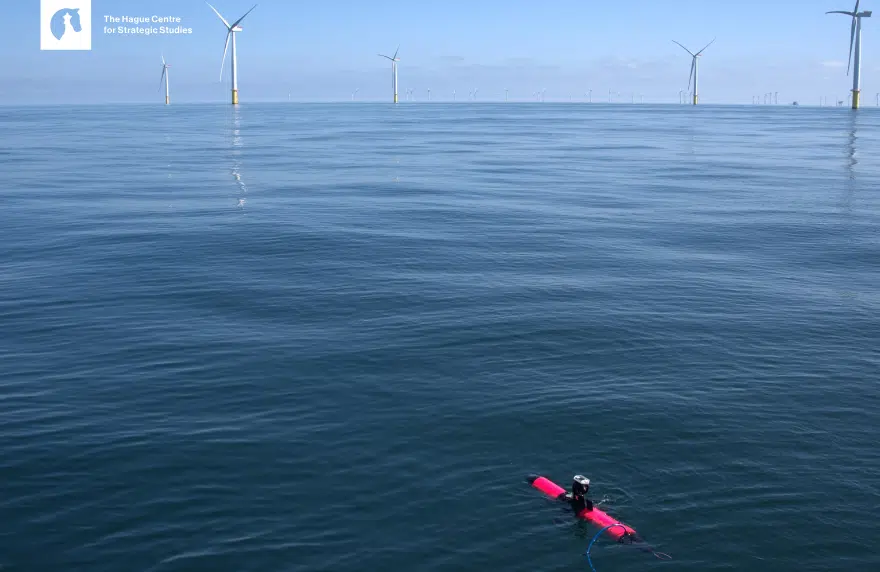
- Dual-use sensors at sea: Sensors installed on wind farms, cables, and vessels can simultaneously support security monitoring (such as detecting anomalous behaviour) and ecological research (such as biodiversity and water quality monitoring), provided that analytical processes and responsibilities are clearly defined in advance.
- A shared, layered maritime situational picture: Integrating data from multiple sources into a common picture of activities, patterns, and ecological developments at sea, supported by agreements on metadata, quality standards, and access arrangements.
- Joint pattern recognition and anomaly detection: Combining datasets enables faster and more accurate identification of anomalies – ranging from suspicious vessel movements to ecological disturbances – provided that shared analytical models and validation standards are established.
- Scenario analysis and stress testing (2030–2050): The same data infrastructure can support both policy analysis and operational preparedness for incidents, including sabotage, extreme weather events, and ecological disruptions.
- Combined protected areas: Zones where human activities are restricted can simultaneously contribute to nature restoration, ecological research, and the protection of critical infrastructure, provided that regulations are consistent and enforceable.
- Enhanced enforcement and incident response: Integrated patrols, clear reporting procedures, and robust follow-up mechanisms are essential for achieving both security and ecological objectives in practice.
One key condition applies across all these opportunities: without stronger enforcement and clear governance structures, measures will remain largely voluntary and ineffective.
The authors therefore advocate targeted pilot projects to rapidly demonstrate the feasibility and added value of cooperation. In addition, clearer articulation of needs and priorities from ecological stakeholders is crucial to enable effective collaboration with security actors.
“Policymakers must now move from exploration to implementation. Establish joint pilot projects, organise data sharing, and strengthen enforcement – otherwise opportunities for both security and nature will remain unrealised,” adds Pieter-Jan Vandoren.
The study underscores that an integrated approach is not only more efficient, but essential for maintaining a balance among the six national security interests in the North Sea.
Authors: Frank Bekkers, with contributions by Pieter-Jan Vandoren
The research was commissioned by the Gieskes-Strijbis Fund. Responsibility for the contents and for the opinions expressed, rests solely with the authors.
This report is an English translation of a publication originally issued in Dutch by HCSS in April 2026: “Twee agenda’s, één zee: Hoe veiligheid en natuur op de Noordzee elkaar kunnen versterken”. While the translation has been prepared with due care, the Dutch-language version remains the authoritative text. In the event of any differences in interpretation or content between the two versions, the Dutch version shall take precedence.


Related Content